
How to Thaw Frozen Pipes Safely in Your Home
A frozen pipe can turn from an inconvenience into a flooded room very quickly. Knowing how to thaw frozen pipes safely gives you the best chance of restoring water without damaging the pipework, ceilings or finishes around it. The key is to act calmly, warm the pipe gradually and know when to stop and call a qualified plumber.
Frozen pipes are most common during prolonged cold weather, particularly in lofts, garages, outside walls, cupboards under sinks and unheated utility spaces. Older properties, rural homes and vacant rental properties can be especially vulnerable where pipe insulation is limited.
First, check whether a pipe may have burst
Before applying any heat, look for signs that the pipe has already split. A frozen pipe does not always leak immediately because the ice can temporarily block the damaged section. Water may begin escaping only as the ice melts and pressure returns.
Check for damp patches, dripping water, staining on ceilings or walls, bulging plasterboard, puddles beneath pipes, or a sudden drop in water pressure. If you can see a crack, split or active leak, turn off the property’s main water supply straight away. This is usually at the internal stopcock, often under the kitchen sink, in a utility room, cloakroom or airing cupboard.
Then open cold taps to relieve pressure and contain any water with towels or buckets. If water has reached electrical fittings, sockets, appliances or a consumer unit, do not touch them. Switch off electricity only if it is safe to do so and seek urgent professional help.
How to thaw frozen pipes safely
If there is no visible leak and you can identify the frozen section, you can often thaw it carefully. A section may feel unusually cold, look frosted, or bulge slightly. You may also find that a tap on one side of the property has stopped running while others are unaffected.
Start by opening the tap supplied by the frozen pipe. For a cold-water pipe, open the cold tap. For a hot-water pipe, open the hot tap. This gives melting ice and trapped pressure somewhere to escape. You may hear air, see a trickle, or notice intermittent flow as the pipe begins to clear.
Warm the pipe gradually, starting at the end nearest the open tap and working back towards the suspected blockage. This approach helps melted water leave the system rather than becoming trapped behind the ice.
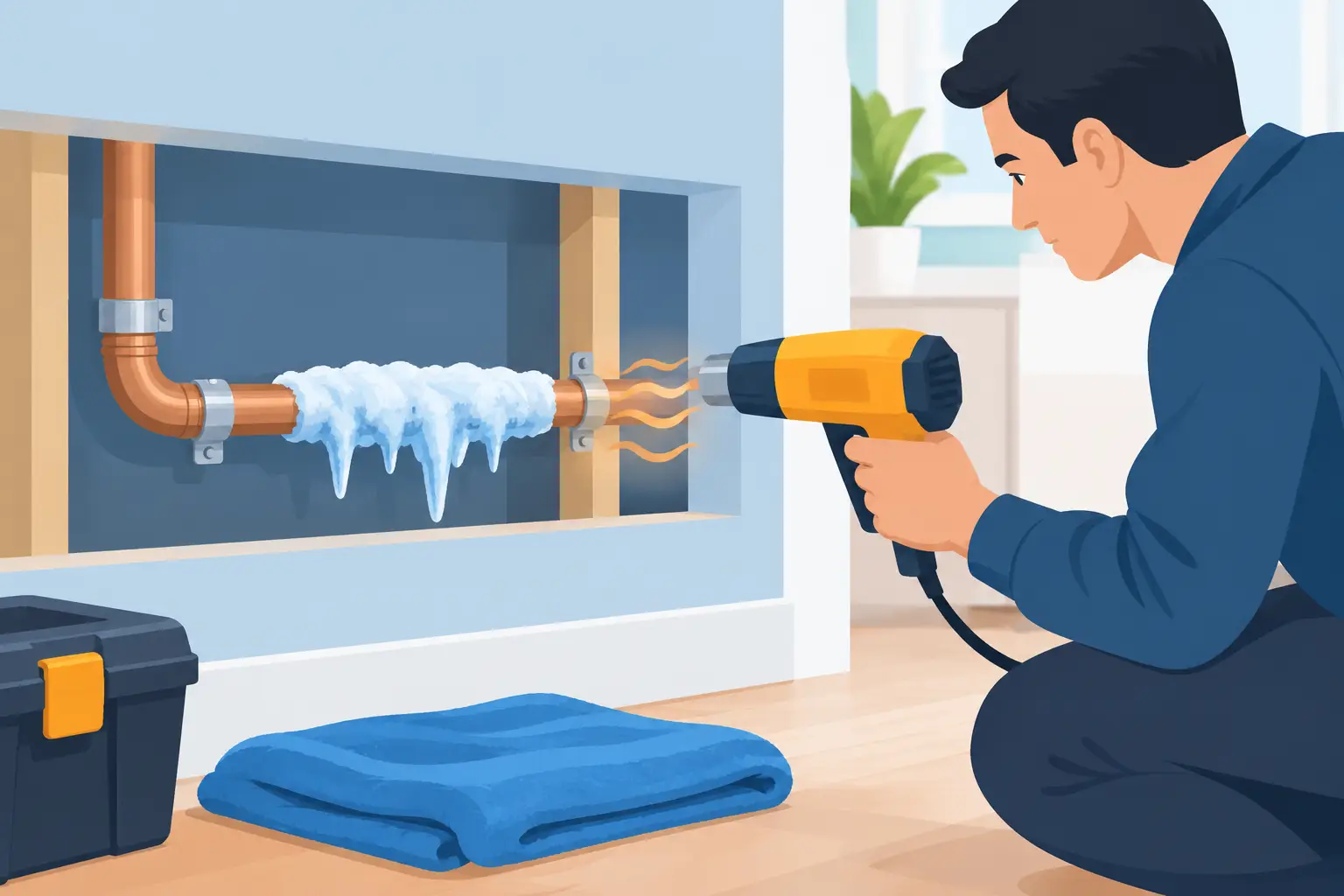
A hairdryer on a low or medium setting is often suitable for accessible metal or plastic pipes. Keep it moving rather than concentrating heat on one small area. You can also wrap warm, damp towels around the pipe and replace them as they cool. A portable fan heater may be used to warm the surrounding room, provided it is positioned safely, kept well away from water and never left unattended.
As the pipe thaws, keep watching it closely. Water flow should gradually return at the open tap. Check the full visible length of the pipe for drips as pressure builds again.
Never use a naked flame or extreme heat
Do not use a blowtorch, heat gun, barbecue, gas hob, candle or any naked flame to thaw plumbing. Apart from the obvious fire risk, intense local heat can damage plastic pipes, soldered joints, seals and nearby wiring. It can also create a serious risk around gas appliances or combustible materials.
Avoid using boiling water directly on a frozen pipe too. The sharp temperature change can damage the pipe, while spilled hot water can cause burns. Gentle, even warming is slower but far safer.
If the frozen pipe is hidden or inaccessible
Do not start removing ceilings, wall panels or boxing unless you are certain of what lies behind them. Pipes often run alongside electrical cables, and forcing access can turn a manageable plumbing problem into a larger repair.
Instead, raise the temperature in the affected area. Open cupboard doors beneath sinks, move stored items away from pipework and heat the room normally. If the frozen section is in a loft, take care around insulation and boarding, and do not place portable heaters among stored belongings or close to combustible materials.
A lack of water at every cold tap may suggest that the incoming supply pipe is frozen, possibly outside the home or below ground. This is not usually a practical DIY thawing job. Contact your water supplier if you believe the issue is on their side of the supply boundary, or arrange a plumber if it is within your property.
Be extra careful with central heating pipework
Frozen central-heating pipes need a more cautious approach. If your boiler displays a fault code, has lost pressure, is making unusual noises, or will not fire, do not repeatedly reset it. A frozen condensate pipe is a common winter issue with condensing boilers, but boiler faults can also have other causes.
You should never dismantle a boiler casing or work on gas components yourself. Gas appliances must be inspected and repaired by a Gas Safe registered engineer. If you smell gas, leave the property if necessary, avoid electrical switches and naked flames, and follow the emergency advice from your gas network provider.
For pipework connected to the heating system, warming the surrounding area may be enough where the pipe is accessible. If you suspect a leak, pressure loss or a frozen pipe beneath floors or inside walls, switch the heating off and arrange professional assistance. Continuing to run a system with damaged pipework can cause significant water damage.
What to do once water is flowing again
Restored water flow is not the end of the job. Keep the tap open for a few minutes so any remaining ice can clear, then inspect exposed pipes, joints and valves carefully. Look again over the next few hours, as a small crack may only become obvious after the pipe has fully thawed.
If you turned off the main water supply, reopen it slowly while someone watches the previously frozen area. Check beneath sinks, around appliances, in loft spaces and below any visible pipe runs. If you find even a small leak, turn the water off again and call a plumber. A temporary wrap or container may limit damage, but it is not a lasting repair.
It is also worth checking your boiler pressure and heating performance once the property is warm. If radiators are not heating correctly, the boiler is losing pressure, or you have concerns about the safety of the system, book an engineer rather than guessing at the cause.
Prevent pipes from freezing again
A pipe that has frozen once is telling you where the property loses heat. Prevention is usually straightforward and far less costly than dealing with a burst pipe.
Insulate exposed water pipes in lofts, garages, outbuildings and cupboards against outside walls using suitable pipe insulation. Insulation slows heat loss, but it does not replace heating in very cold conditions. Keep the home at a low, consistent temperature during cold spells, including when you are away. For most occupied homes, setting the heating to come on periodically is safer than turning it off entirely.
If you are leaving a property empty, especially a rental or holiday home, make a clear winter plan. Depending on the property and length of vacancy, this may include maintaining background heating, insulating vulnerable areas, asking someone to check the home, or having the water system professionally drained down. The right option depends on the building, the heating system and how long it will be unoccupied.
Outside taps and external pipework need particular attention. Isolate outdoor taps where possible, drain them before freezing weather and fit an insulated cover to exposed fittings. Inside, keep kitchen and bathroom cabinet doors open during severe cold so warmer air can circulate around supply pipes.
If frozen pipes, recurring boiler pressure issues or a winter leak are affecting your home in Cheltenham, Gloucestershire, the Cotswolds, Bath or Stroud, Plumbing Bend Heating Service Ltd can assess the problem and carry out dependable repairs. Acting early can protect your property before a small freeze becomes a major water damage claim.