
When to Call a Gas Safe Engineer for Boiler Repair
A boiler that stops working is more than an inconvenience, particularly when it leaves your home without heating or hot water. Calling a Gas Safe engineer for boiler repair gives you the right level of expertise for work on a gas appliance, helping to protect your household, restore comfort and avoid turning a manageable fault into a larger problem.
Some boiler faults are obvious, such as no heat or a visible leak. Others are quieter: rising energy bills, odd noises or a system that takes longer to warm the house. Knowing which signs need prompt professional attention can make a real difference to safety, repair costs and the life of your boiler.
Why boiler repairs need a Gas Safe engineer
Gas boilers combine gas, electricity, water, combustion and pressurised heating systems in one appliance. A fault may sit in the controls, pump, fan, ignition, heat exchanger, flue, gas supply or pipework. Diagnosing the cause properly requires the correct training, testing equipment and legal registration.
In the UK, anyone carrying out work on a domestic gas boiler must be appropriately Gas Safe registered for that type of work. This is not simply a badge of reassurance. It confirms that the engineer is qualified to work safely on gas appliances and can check that the boiler is operating and venting combustion gases correctly.
A proper repair visit should not be guesswork or a quick part swap. The engineer will identify the fault, assess the boiler’s safety, explain the likely repair, and test the appliance after work is complete. If an appliance is unsafe to use, they will explain why and what needs to happen before it can be put back into service.
You are entitled to ask to see an engineer’s Gas Safe ID card. The card shows the work they are qualified to carry out, which is particularly useful if you have a boiler, gas fire or other appliance requiring attention.
Signs you should arrange boiler repair
A boiler does not always fail without warning. Acting when the first symptoms appear can reduce the chance of being left with no heating during a cold spell.
No heating or hot water
If the boiler will not fire up, keeps cutting out, or produces hot water but no heating, there may be a problem with the controls, diverter valve, pump, ignition or system pressure. Check simple user-level points first, such as whether the thermostat is set correctly and whether the boiler pressure is within the manufacturer’s recommended range. If the fault remains, arrange a qualified inspection rather than repeatedly resetting the boiler.
Pressure that keeps falling
A sealed central-heating system can lose pressure because of a leak, a faulty pressure relief valve or an issue with the expansion vessel. Topping it up may bring the heating back temporarily, but it does not fix the underlying cause. If you need to repressurise the boiler regularly, it needs investigating.
Leaks, drips or staining
Water around a boiler, beneath radiators or near pipe joints should never be ignored. Even a small leak can damage components, lower pressure and lead to corrosion. Switch off the boiler if it is safe to do so, contain any water where possible, and contact an engineer. Do not remove the boiler casing or attempt to repair internal parts yourself.
Banging, whistling or gurgling noises
A little operating noise can be normal, especially as a boiler fires up and shuts down. Persistent banging, kettling, whistling or gurgling is different. It can point to trapped air, sludge in the system, restricted water flow, a failing pump or limescale within the heat exchanger. The correct solution depends on the cause. In some properties, a repair may need to be paired with system cleaning or powerflushing to prevent the fault returning.
A yellow or lazy flame, soot or a burning smell
A healthy gas flame is normally crisp and blue. A yellow or orange flame, black marks around the appliance, soot, or unusual fumes may indicate incomplete combustion. Turn the appliance off if you can do so safely, open windows, avoid using electrical switches if you suspect a gas leak, and seek urgent professional help.
If a carbon monoxide alarm sounds, leave the property immediately and call the appropriate emergency service or gas emergency line from outside. Carbon monoxide has no colour or smell and can be extremely dangerous. Do not re-enter until you have been told it is safe.
What happens during a professional boiler repair?
A reliable repair starts with listening. Tell the engineer when the issue began, whether it is intermittent, what fault code is displayed, and whether you have noticed changes in heating performance or water pressure. This information can speed up diagnosis, but the engineer will still carry out their own checks.
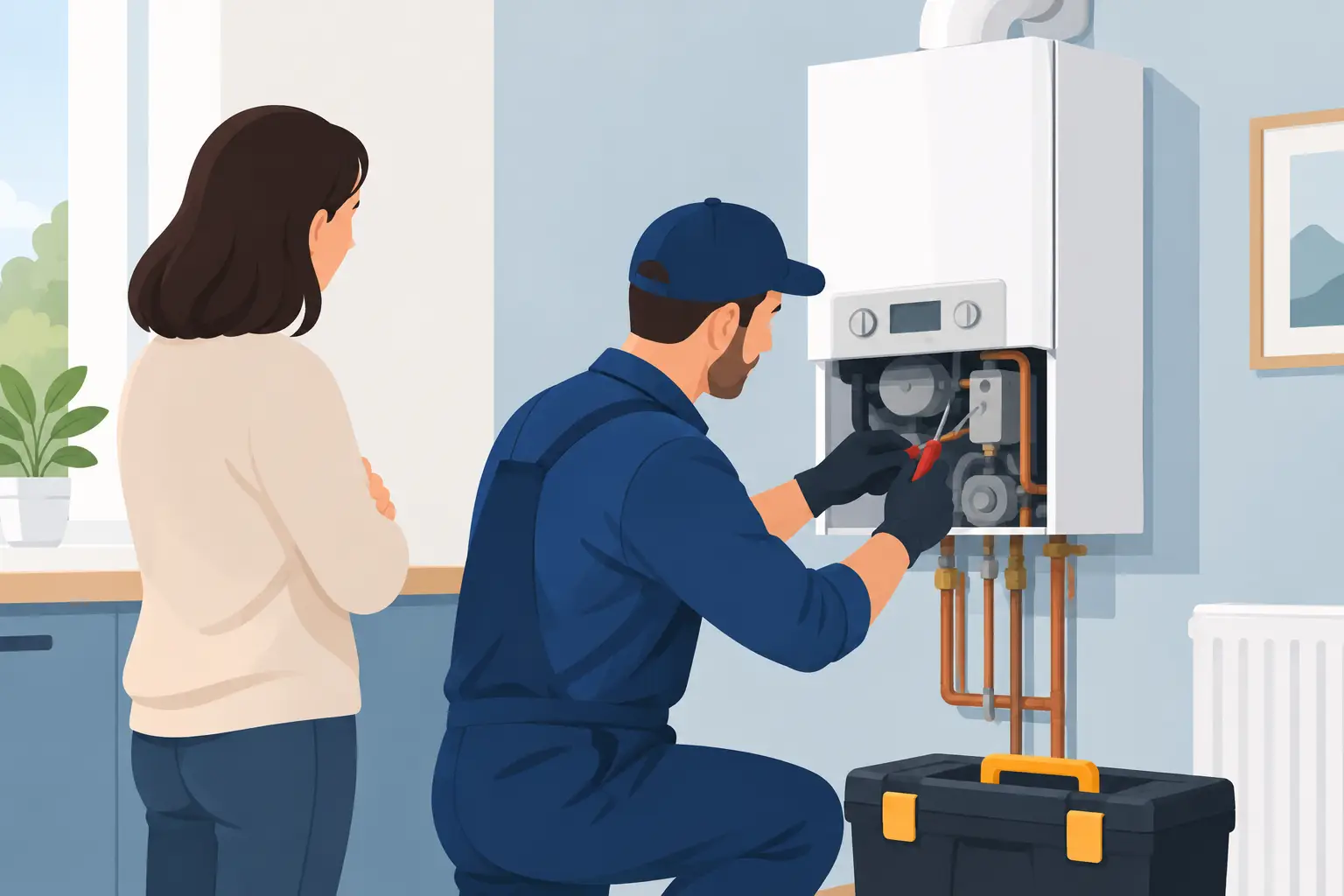
They may inspect the boiler, controls, condensate pipe, flue route, system pressure and visible pipework. Depending on the fault, they can test electrical components, gas pressures, combustion performance and circulation through the heating system. A repair might involve replacing a worn valve, sensor, fan, pump, ignition component or seal. In other cases, the issue is external to the boiler, such as a faulty thermostat, blocked condensate pipe or a problem with the system water.
Once the repair is complete, the boiler should be tested under operation rather than simply switched on. The engineer should confirm that it fires correctly, responds to controls, provides heat or hot water as expected, and is safe to use. Keep any paperwork supplied, especially for a rental property or when maintaining a service history.
Repair or replacement: how to make the right call
Not every fault means a new boiler is needed. A relatively young, well-maintained boiler with a clear, economical repair is often worth fixing. This is particularly true where the rest of the heating system is in good condition and suitable replacement parts are readily available.
Replacement may be the more sensible option if breakdowns are frequent, major components have failed, parts are obsolete, or the boiler is approaching the end of its useful life. An older boiler may also be less efficient, so the decision should consider future running costs as well as the immediate repair bill.
The right answer depends on the appliance, the fault and the condition of the wider system. A good engineer will explain the options in plain language, including whether a repair is likely to offer a lasting solution or simply buy time. Transparent pricing matters here: you should understand the diagnostic charge, parts required and expected labour before work proceeds wherever possible.
Landlords, homeowners and managed properties
For landlords, gas safety duties are a legal responsibility. Gas appliances and flues in rented homes require an annual gas safety check by a Gas Safe registered engineer, and tenants should know what to do if a boiler develops a fault. Prompt repairs are also essential for maintaining a safe, habitable property.
Homeowners are not legally required to have an annual safety record in the same way, but an annual boiler service remains a sensible preventative measure. It gives an engineer the chance to identify wear, safety concerns and poor combustion before they become an untimely breakdown. For property managers, planned servicing across a portfolio can also reduce emergency call-outs and provide a clearer record of maintenance.
Help your boiler run reliably after repair
After a repair, a few practical habits can support efficient operation. Keep the boiler area accessible and clear of stored items. Use heating controls consistently rather than constantly turning the system on and off. Look out for recurring pressure loss, cold radiator spots, leaks or fault codes, and deal with them early.
If your heating is slow to warm up, radiators are unevenly heated or the boiler has suffered repeat circulation-related faults, ask whether the system water needs attention. Sludge and debris can affect boiler performance over time, so cleaning, inhibitor treatment or powerflushing may be appropriate in the right circumstances.
When your boiler is unreliable, do not wait for the next cold morning to find out whether it will restart. Plumbing Bend Heating Service Ltd provides qualified, practical boiler support across Cheltenham, Gloucestershire, the Cotswolds, Bath and Stroud, with clear advice focused on a safe, dependable repair.