

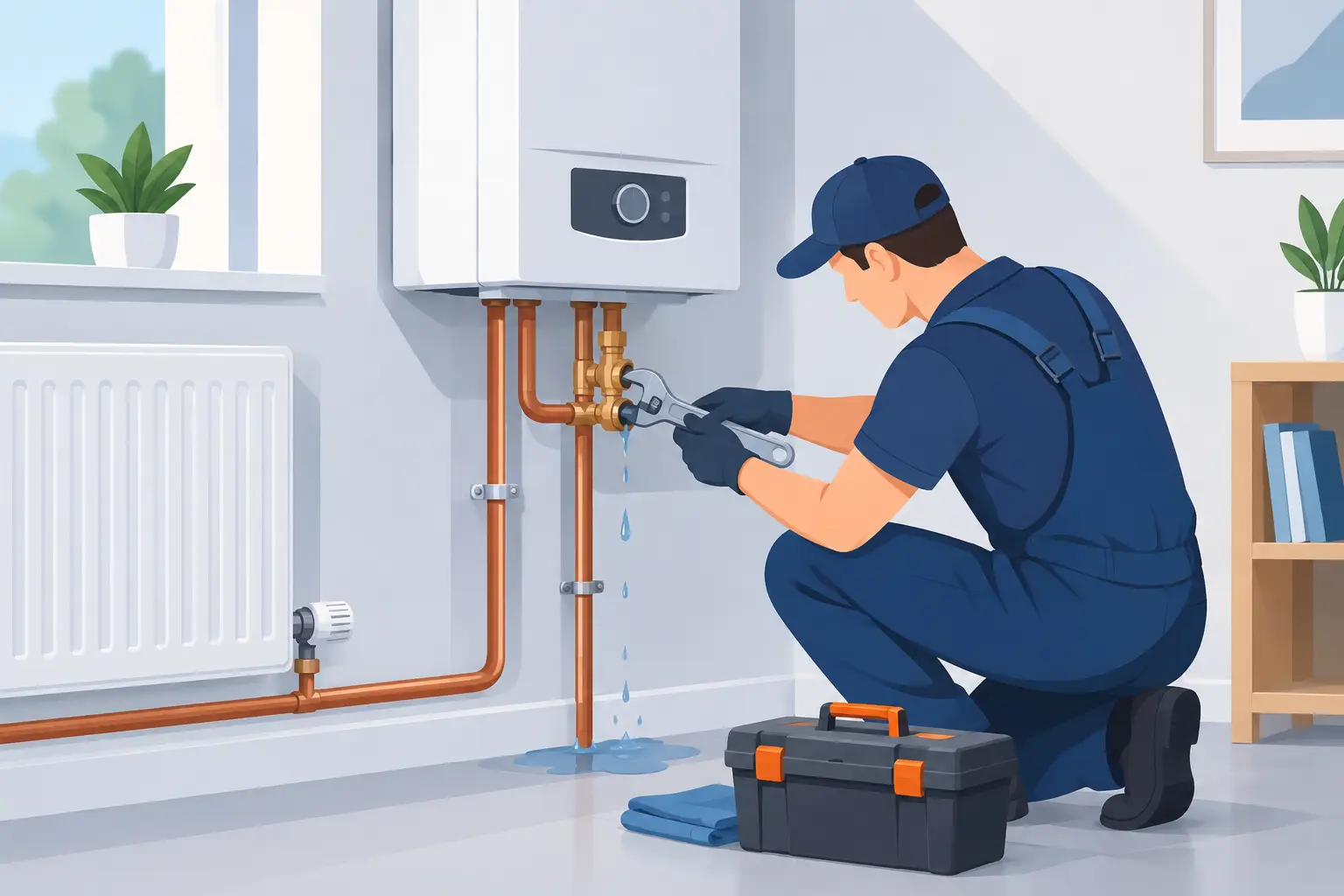
Central Heating System Leak Repair Explained
A damp patch beneath a radiator, a boiler that keeps losing pressure or a persistent smell of moisture can all point to the same problem. Central heating system leak repair is not something to put off, even when the drip seems minor. Water escaping from a sealed heating system can damage floors and walls, reduce heating performance and, over time, contribute to corrosion inside the pipework and boiler.
The right response depends on where the leak is, how quickly water is escaping and whether the heating system can be isolated safely. Some visible issues can be contained while you arrange an appointment. Hidden leaks, boiler faults and repeated pressure loss need professional investigation to prevent a small fault becoming a costly repair.
Signs you may have a central heating leak
Not every central heating leak leaves a puddle. Much of the pipework in modern homes runs beneath floors, behind walls or through ceilings, so the first warning is often a change in how the system behaves.
A drop in boiler pressure is one of the clearest signs. Most sealed systems operate at around 1 to 1.5 bar when cold, although the correct setting can vary by boiler and property. If you regularly need to top up the pressure, water may be escaping somewhere in the system. A pressure gauge that rises sharply when the heating is on can also indicate a problem with the expansion vessel or pressure relief arrangement rather than a straightforward pipe leak.
Look for staining on ceilings, bubbling paint, warped skirting boards, damp carpet edges or unexplained marks around radiator valves. Green, white or rusty deposits around joints can show that a very slow leak has been present for some time. You may also notice cold radiators, gurgling sounds, frequent bleeding or a boiler that cuts out due to low pressure.
These symptoms do not always have one simple cause. Condensation, a plumbing leak from another water supply or a faulty boiler component can appear similar. Accurate diagnosis matters because repairing the wrong area can mean more disruption without resolving the fault.
What to do when you find water escaping
If water is visibly leaking from a radiator, valve or pipe, place a towel or shallow container underneath if it is safe to do so. Protecting flooring quickly can reduce secondary damage, particularly around timber floors and laminate.
Turn off the heating at the programmer or thermostat. If the leak is substantial, switch off the boiler using its controls and isolate the electrical supply only if you can do so without touching wet surfaces. Do not remove the boiler casing or attempt internal boiler repairs. Gas boilers must be inspected and repaired by a suitably qualified Gas Safe engineer.
If the leak is from a radiator valve, closing both valves may limit the amount of water released from that radiator. Turn the thermostatic radiator valve clockwise, then close the lockshield valve at the other end, noting its position first if possible. This is only a temporary containment measure. Avoid overtightening fittings, as old valves and pipework can be damaged easily.
Where water is coming through a ceiling, near electrical fittings or from concealed pipework, do not take chances. Keep clear of the affected area, avoid using electrical equipment nearby and arrange urgent professional assistance. A controlled investigation is far safer than lifting floors or opening walls at random.
Why heating leaks should be repaired promptly
A sealed central heating system relies on stable pressure and treated system water to work efficiently. Every time the system loses water and is topped up, fresh water introduces oxygen and minerals. That can accelerate internal corrosion, create sludge and affect radiators, pumps, valves and the boiler heat exchanger.
A small external leak can also become a larger one as the system heats up and cools down. Pipework expands slightly when hot, while worn seals and fittings may only leak at operating temperature. This is why a joint that looks dry when the heating is off should not automatically be ruled out.
For landlords and property managers, early repair also helps limit disruption for tenants and protects the condition of the property. For homeowners, it can avoid damage to finishes that costs far more than the original heating repair.
How a professional leak repair is diagnosed
A proper central heating system leak repair begins with finding the source, not simply restoring boiler pressure. An engineer will usually inspect visible radiators, valves, pipe joints, the boiler and its safety discharge pipe. They will check the pressure pattern, assess the system condition and identify whether the issue is external water loss, a boiler component fault or a hidden leak.
In some cases, the cause is straightforward. A worn radiator valve spindle, loose compression joint or failed bleed point can be repaired or replaced with limited disruption. If a boiler’s pressure relief valve is passing water outside, the fault may involve the valve, expansion vessel or both. These repairs need the correct parts, testing and recommissioning.
Concealed leaks require a more measured approach. Pressure testing and specialist leak detection methods can help narrow down the affected section before floors or walls are opened. This reduces unnecessary damage and gives a clearer repair plan. Older properties, extensions and systems altered over many years can be more complex, as pipe routes are not always obvious.
Once the leak has been repaired, the system should be refilled to the correct pressure, vented and checked while running. Depending on its condition, it may also benefit from cleaning, inhibitor treatment or powerflushing. Powerflushing is not necessary for every leak, but it can be worthwhile where there is significant sludge, poor circulation or repeated corrosion-related faults.
Common repairs and what affects the cost
The cost of a repair depends less on the size of the drip and more on access, the failed component and the work needed to return the system to reliable operation. Replacing an accessible radiator valve is usually more straightforward than locating a leak beneath a solid floor. A faulty boiler pressure relief valve can also be a contained repair, while an expansion vessel issue may take longer depending on the boiler model and access.
It is worth asking for a clear explanation of the diagnosis, the proposed repair and any follow-up work recommended. Transparent pricing should distinguish between urgent attendance, investigation, replacement parts and any wider system maintenance. A reputable engineer will explain where there is a choice, such as repairing a section of older pipework versus replacing a more vulnerable run to reduce the risk of repeat leaks.
Can you repair a central heating leak yourself?
Homeowners can safely carry out limited checks, such as reading the pressure gauge, looking for visible drips and noting when the fault occurs. You can also turn the heating off and contain small amounts of water while help is arranged.
Repairs are different. Draining a radiator, replacing valves, disturbing pipe joints or repressurising a boiler incorrectly can make the leak worse or introduce air and debris into the system. Boiler repairs must never be treated as a DIY job. If the boiler, flue, gas supply or internal components may be involved, use a Gas Safe engineer.
Temporary leak-sealing products may seem attractive, but they are rarely a dependable answer. They can mask the source, affect system water quality and leave the underlying fault in place. They are particularly unsuitable where there is a significant leak or a suspected boiler issue.
Preventing future heating leaks
Regular boiler servicing gives an engineer the chance to check pressure, safety components and visible signs of deterioration before a fault becomes urgent. Keeping the system correctly treated with inhibitor helps protect metal components from corrosion, especially after repair work, radiator replacement or system draining.
Pay attention to pressure changes rather than repeatedly topping the system up. Check radiators and valves occasionally, particularly at the start of the heating season, and act on stains or damp smells early. If radiators are cold at the bottom, heat unevenly or need frequent bleeding, arranging an assessment can help address sludge or circulation issues before they contribute to further problems.
For homes and properties across Cheltenham, Gloucestershire, the Cotswolds, Bath and Stroud, Plumbing Bend Heating Service Ltd can investigate heating leaks, carry out repairs and help restore safe, efficient operation. A prompt assessment protects more than your boiler pressure – it helps keep your home dry, warm and ready for the colder months.