
Boiler Losing Pressure Repeatedly? What to Do
A boiler pressure gauge that drops once may be a minor issue. A boiler losing pressure repeatedly is different. If you are topping it up every few days or weeks, the sealed central-heating system is losing water or cannot manage pressure correctly. Repressurising the system may bring the heating back temporarily, but it does not deal with the cause.
For homeowners, landlords and property managers, the priority is to keep the property warm while avoiding preventable damage to the boiler or heating system. Here is what repeated pressure loss usually means, what you can safely check, and when to arrange a professional repair.
What boiler pressure should be
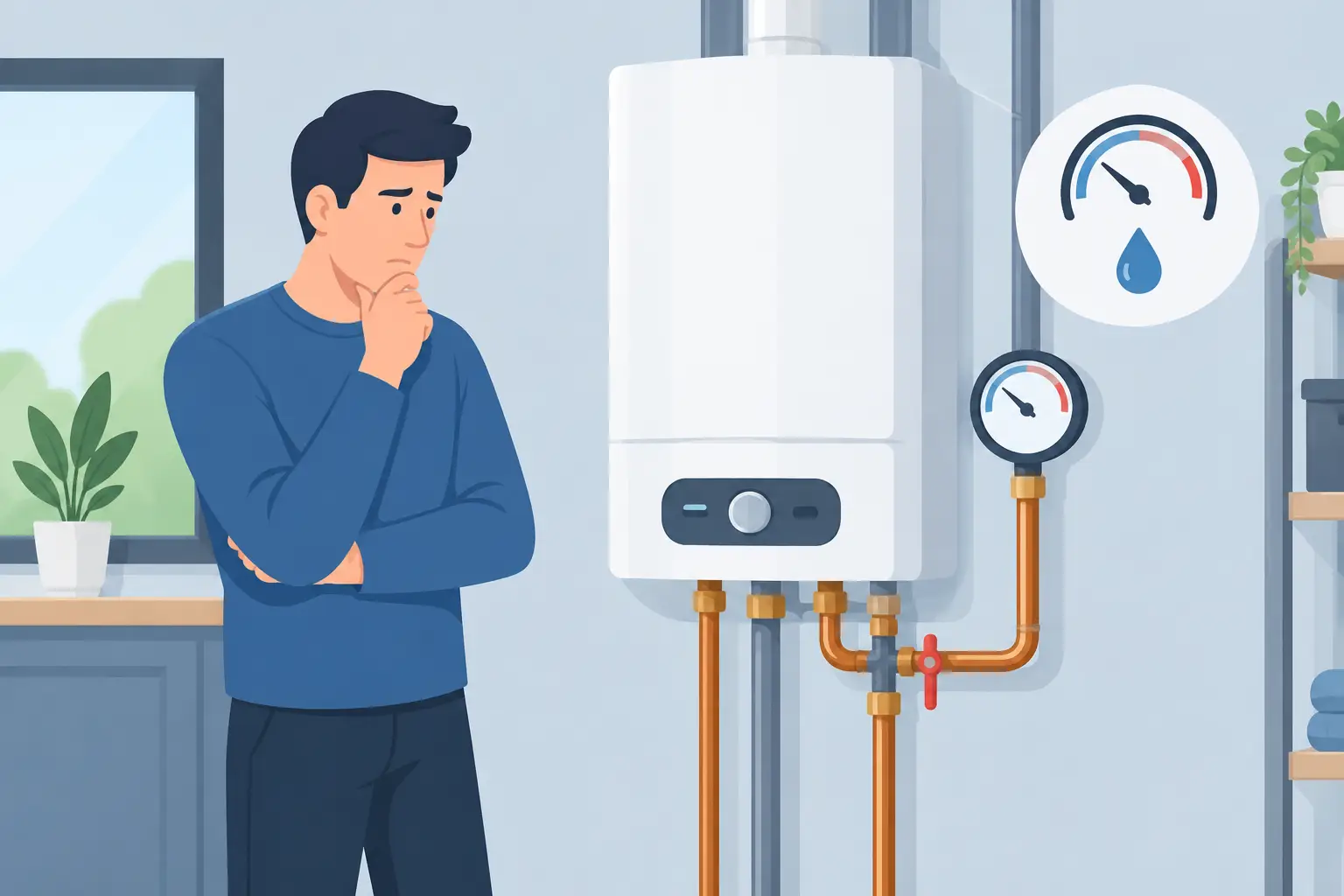
Most sealed central-heating systems should sit at around 1 to 1.5 bar when cold, although the correct setting can vary by boiler manufacturer and installation. When the heating is running, the pressure rises as water warms and expands. A modest increase is normal.
If the gauge falls below the boiler’s minimum operating pressure, often around 0.5 to 1 bar, the boiler may lock out and stop providing heating or hot water. You can usually see this as a low-pressure code or warning light on the display.
Topping up through the filling loop can restore pressure, but it should not be a routine task. Adding fresh water repeatedly introduces oxygen and minerals into the system. Over time, that can encourage internal corrosion, sludge and component wear. It is better to find the fault early than keep treating the symptom.
Why is your boiler losing pressure repeatedly?
The most common cause is a leak somewhere in the heating system. It might be obvious, such as water beneath a radiator valve, pipework joint or boiler. However, many leaks are slow and difficult to spot. Pipes may run beneath floors, behind boxing or through walls, while a small weep can evaporate on a warm pipe before it leaves a visible puddle.
Check accessible areas carefully, including radiator valves, towel rails, exposed pipework and connections under the boiler. Look for damp patches, staining, corrosion, green or white deposits around joints, or marks on carpets and flooring. Do not remove the boiler casing to investigate. Components inside should only be inspected by a qualified engineer.
A leaking pressure relief valve
A pressure relief valve is a safety device that discharges water if pressure becomes too high. It normally runs to an external copper pipe, often near the boiler or on an outside wall. If this valve has operated or is not sealing properly afterwards, water can drip outside and the system pressure will gradually fall.
A quick visual check of the discharge pipe can be useful. If it is wet or dripping when the heating has been off for some time, arrange an engineer visit. The fault may be the valve itself, but it can also indicate another issue causing pressure to rise too far.
Expansion vessel problems
The expansion vessel absorbs the increase in water volume as your heating system warms up. When its internal charge is low, or its internal diaphragm has failed, boiler pressure can climb sharply during operation. The pressure relief valve may then release water to protect the system. Once everything cools down, the gauge can be left unusually low.
A useful clue is a large movement on the pressure gauge. For example, the boiler may start at 1 bar cold, climb towards 3 bar while heating is on, then drop close to zero when cold again. This needs proper diagnosis. Repressurising alone will not restore a failed expansion vessel.
Faulty filling loop or internal boiler component
The filling loop is used to add water to a sealed system. If its valves are not fully closed, pressure may rise rather than fall. This can trigger the pressure relief valve and leave you with recurring pressure loss afterwards. Some boilers also have internal filling arrangements, so the source is not always immediately visible.
Other possible faults include a leaking automatic air vent, heat exchanger issue, pump seal or internal connection. These require a boiler engineer to test the appliance safely and identify the failed part.
Radiator bleeding and recent heating work
Pressure can drop after bleeding radiators because a small amount of water and air has been released. This is normal. Repressurise the system to the manufacturer’s recommended cold level once bleeding is complete, then monitor it over the next few days.
Similarly, a newly installed radiator, boiler repair or system alteration may need a final pressure adjustment. Continued loss after this settling period is not normal and should be checked.
Safe checks you can make before calling
There are a few simple checks that can help you describe the problem clearly. First, note the pressure when the boiler is cold, then check it again after the heating has run for an hour. Record whether it steadily drops over days, falls only after heating is used, or rises close to 3 bar before falling.
Next, inspect visible radiators and accessible pipework for signs of moisture. Check beneath radiator valves and look at the external pressure-relief discharge pipe. If you have recently bled a radiator, confirm that the bleed screw is closed securely, without overtightening it.
You can top up the pressure once using the correct filling method for your boiler, following the manufacturer’s instructions. Stop at the recommended cold pressure and make sure the filling loop valves are fully closed afterwards. Do not keep increasing the pressure in the hope that the issue will disappear, and never attempt to repair gas components, remove the boiler cover or interfere with safety valves.
If you notice water near electrical fittings, significant leaks, staining that is spreading, or a boiler displaying a fault code, switch the boiler off if it is safe to do so and seek professional advice. If you can smell gas, leave the property, avoid switches or naked flames, and contact the gas emergency service immediately.
When repeated pressure loss needs an engineer
Arrange a Gas Safe engineer if the boiler needs topping up more than once, pressure drops quickly, there is any visible leak, or the gauge rises sharply when the heating is on. The same applies if the boiler locks out regularly or you have no heating and hot water.
A professional visit should involve more than simply repressurising the system. The engineer can inspect the boiler and heating circuit, test the expansion vessel, assess the pressure relief valve and identify hidden leaks where possible. The right repair might be a valve replacement or a small pipework repair. In other cases, a system clean, component replacement or further leak investigation may be needed.
The cost and scope depend on where the fault is. An accessible radiator valve leak is usually more straightforward than pipework concealed beneath a floor. Clear diagnosis matters because replacing parts without testing can waste time and money.
Preventing pressure problems from returning
Annual boiler servicing is one of the best ways to catch early warning signs, including deterioration around valves, pressure issues and poor system condition. A service also helps keep your boiler operating efficiently and safely.
It is also worth dealing with small drips promptly and keeping an eye on the pressure gauge during the heating season. If radiators have cold spots, noisy circulation or discoloured water when bleeding, ask an engineer whether the system would benefit from cleaning or treatment. Sludge and corrosion do not always cause pressure loss directly, but they can affect performance and shorten the life of components.
For rented properties, record pressure problems and repairs rather than relying on tenants to top up the boiler repeatedly. A clear maintenance record helps protect the heating system and provides a faster route to diagnosis if the fault returns.
Repeated pressure loss is a repair issue, not a normal part of owning a boiler. Plumbing Bend Heating Service can investigate the cause, carry out the necessary repair and help keep your heating dependable across Cheltenham, Gloucestershire and the surrounding areas.