
When Your Heating Needs a Powerflushing Service
A cold radiator at the far end of the house, a boiler that seems to work harder than it should, and rooms that take too long to warm up are often signs of the same hidden problem. A powerflushing service clears the sludge, rust and debris that can build up inside a central-heating system, helping heat circulate properly again.
For homeowners, landlords and property managers, it is a practical way to improve heating performance without automatically replacing every radiator or the boiler. It is not needed for every system, but where internal contamination is the cause of poor circulation, a professional flush can make a noticeable difference to comfort, efficiency and reliability.
What a powerflushing service does
Central-heating water should circulate cleanly through the boiler, pipework and radiators. Over time, however, the metal components in older systems can corrode internally. This creates a dark, magnetic sludge known as magnetite, along with scale and other deposits.
That material settles in radiators, narrow pipe runs, valves and boiler components. The result is restricted water flow. Your boiler may still produce heat, but that heat cannot reach every part of the system as effectively as it should.
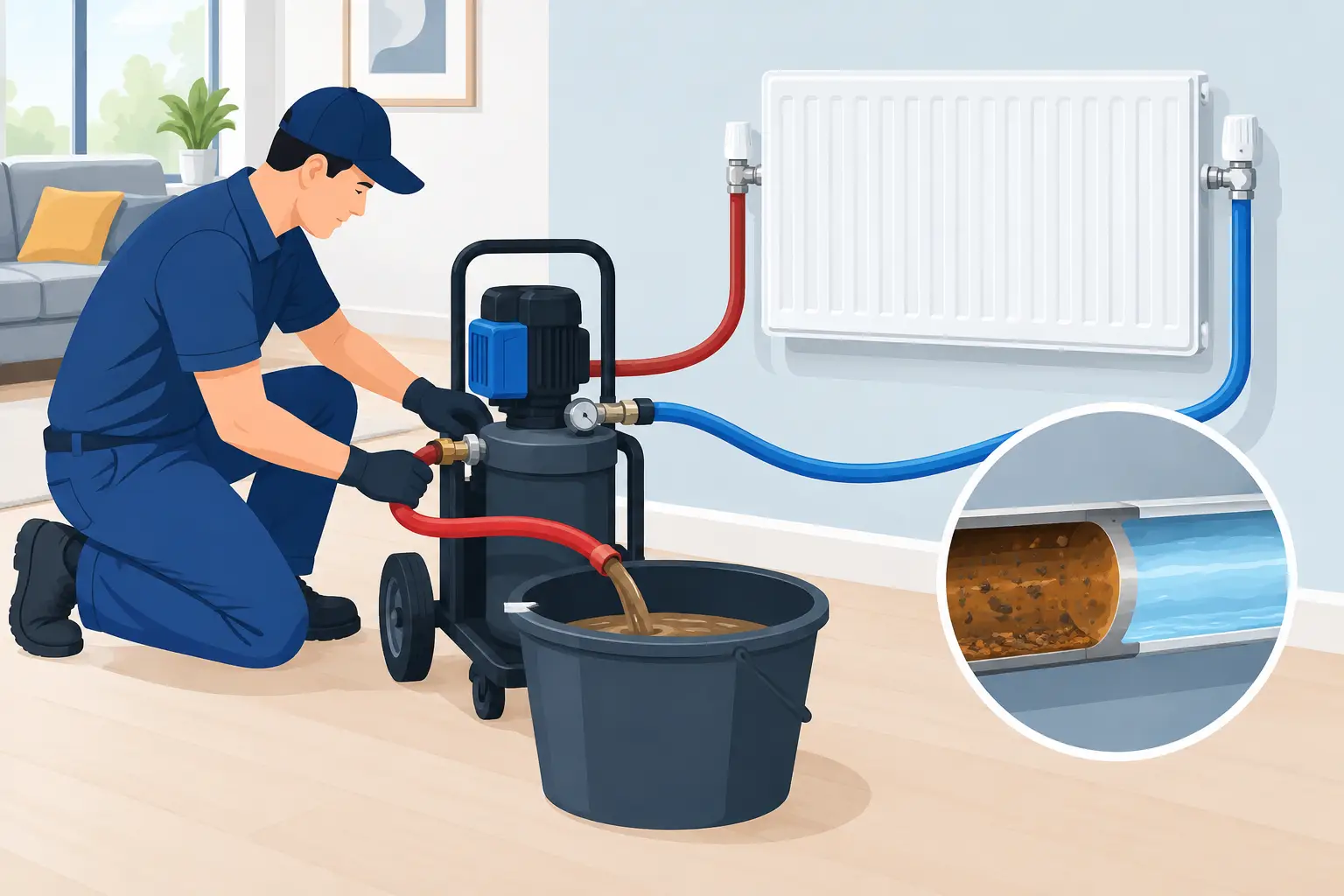
A powerflush uses a specialist pump to move cleaning solution and water around the heating system at a controlled flow rate. The engineer works through each radiator and section of the system to dislodge contamination, then flushes it away. Once the water is running clear, the system is refilled, treated with inhibitor and tested.
The process is more thorough than simply draining and refilling a system. A standard drain-down removes some water, but it may leave settled debris behind in radiators and pipework. Powerflushing is designed to target that built-up contamination.
Signs you may need a powerflushing service
Uneven heating is one of the clearest warning signs. If a radiator is hot at the top but cold at the bottom, sludge may have collected inside it. If it is cold at the top, trapped air could be the problem instead, so bleeding the radiator may resolve it. A qualified engineer can tell the difference before recommending any further work.
Other common signs include radiators that take a long time to heat, frequent boiler lockouts, noisy circulation, discoloured water when a radiator is bled, and repeated problems with pumps or valves. You may also find that some rooms never reach a comfortable temperature, even when the thermostat is set correctly.
A heating system that has been extended over the years can be particularly prone to circulation issues. Adding radiators, replacing a boiler or connecting underfloor heating changes the demands on the system. If the water quality has not been managed properly, the existing sludge can be disturbed and begin causing faults elsewhere.
These symptoms do not always mean a flush is the answer. A faulty pump, incorrectly balanced radiators, a blocked valve, poor controls or an undersized boiler can produce similar results. The right approach starts with diagnosing the cause, rather than treating powerflushing as a one-size-fits-all repair.
Why sludge affects your boiler and heating bills
Sludge makes your heating work less efficiently because it prevents heat from moving freely around the system. A boiler may need to run for longer to bring rooms up to temperature. Radiators may feel warm in places but fail to give out their full heat.
There is also a reliability issue. Modern boilers contain compact heat exchangers and other components that depend on good water flow. Contaminated system water can contribute to blockages, overheating and unnecessary wear. Left unresolved, a circulation problem can become a more expensive repair.
For landlords and property managers, poor heating performance can lead to avoidable tenant complaints and call-outs, especially during colder months. For homeowners, the frustration is usually simpler: you are paying to heat the house, but parts of it remain chilly.
A properly completed flush will not turn an inefficient old boiler into a new one, and it cannot fix poor insulation or draughts. What it can do is help a sound heating system perform as it was designed to, with more consistent warmth and less strain on key components.
What happens during the appointment
Before starting, the engineer should inspect the heating system and discuss the symptoms you have noticed. They may check radiator temperatures, system pressure, boiler operation and the condition of the heating water. This helps establish whether powerflushing is appropriate and identify any faults that need separate attention.
The flushing machine is then connected to the system, often at a radiator or suitable connection point. Cleaning chemicals are circulated to loosen deposits, while the engineer works on radiators individually where necessary. In stubborn areas, specialist tools may be used to agitate debris safely and improve the clean-out.
The water is flushed through until it is clear. The system is then refilled, vented and brought back to the correct pressure. A corrosion inhibitor is added to help reduce future internal rusting, and the engineer checks that radiators heat evenly and the boiler is operating correctly.
Most domestic jobs can be completed in a day, although this depends on the size, condition and layout of the system. Larger properties, heavily contaminated systems and complex heating arrangements may take longer. Your engineer should explain the likely timescale and cost before work begins.
Is powerflushing always the right choice?
Not necessarily. A newer system with one cold radiator may only need bleeding, balancing or a valve replacement. If a radiator is badly corroded or leaking, replacing it may be more sensible than trying to clean it. A serious boiler fault also needs a targeted repair rather than a flush.
There are occasions when a partial clean, magnetic filter installation or chemical treatment is the better option. Equally, if a boiler replacement is planned and the existing system water is dirty, cleaning the system before the new boiler is installed can be a sensible investment. It helps protect the new equipment from contamination already sitting in old pipework and radiators.
This is why transparent advice matters. A reputable heating engineer should explain what they have found, what a powerflush can realistically achieve, and whether there are any risks or additional repairs to consider.
Keeping the system clean after flushing
A flush is most effective when it is followed by good ongoing maintenance. The inhibitor added after the work helps slow corrosion, but its level should be checked as part of appropriate system servicing. If the system is drained for repairs or alterations, it may need to be topped up again.
A magnetic filter can also provide valuable protection by collecting magnetic debris before it reaches sensitive boiler parts. It should be cleaned during annual boiler servicing. Addressing small leaks, maintaining correct pressure and ensuring the system is properly balanced will also help protect heating performance.
If you notice cold spots returning soon after a flush, do not ignore them. It could indicate an unresolved circulation issue, a leak allowing fresh oxygen into the system, or contamination that needs further investigation.
Choose experienced local heating engineers
Powerflushing involves your boiler, radiators and central-heating pipework, so it should be completed by an experienced engineer using the correct equipment and chemicals. Good workmanship matters just as much as the machine itself. The system needs to be assessed carefully, flushed methodically and protected properly afterwards.
Plumbing Bend Heating Service Ltd provides practical heating support across Cheltenham, Gloucestershire, the Cotswolds, Bath and Stroud. Whether your heating has become uneven, your boiler is showing signs of poor circulation or you are preparing for a boiler upgrade, a professional inspection can give you a clear answer before the problem develops further.
A warm home should not depend on turning the thermostat higher and hoping for the best. If your radiators are underperforming, arrange an assessment early and give your heating system the chance to work properly again.