
Can Frozen Pipes Burst at Home? What to Do
A cold snap can turn a quiet plumbing issue into a costly escape of water. Can frozen pipes burst? Yes. A frozen pipe can crack or split, often revealing the damage only when temperatures rise and water begins flowing again. Acting early can protect your home, possessions and heating system from serious water damage.
For homeowners, landlords and property managers across Gloucestershire, the Cotswolds, Bath and Stroud, exposed pipework is a particular concern. Older properties, unheated lofts, outbuildings, garages and external walls can all leave water pipes vulnerable when temperatures fall below freezing.
Can frozen pipes burst?
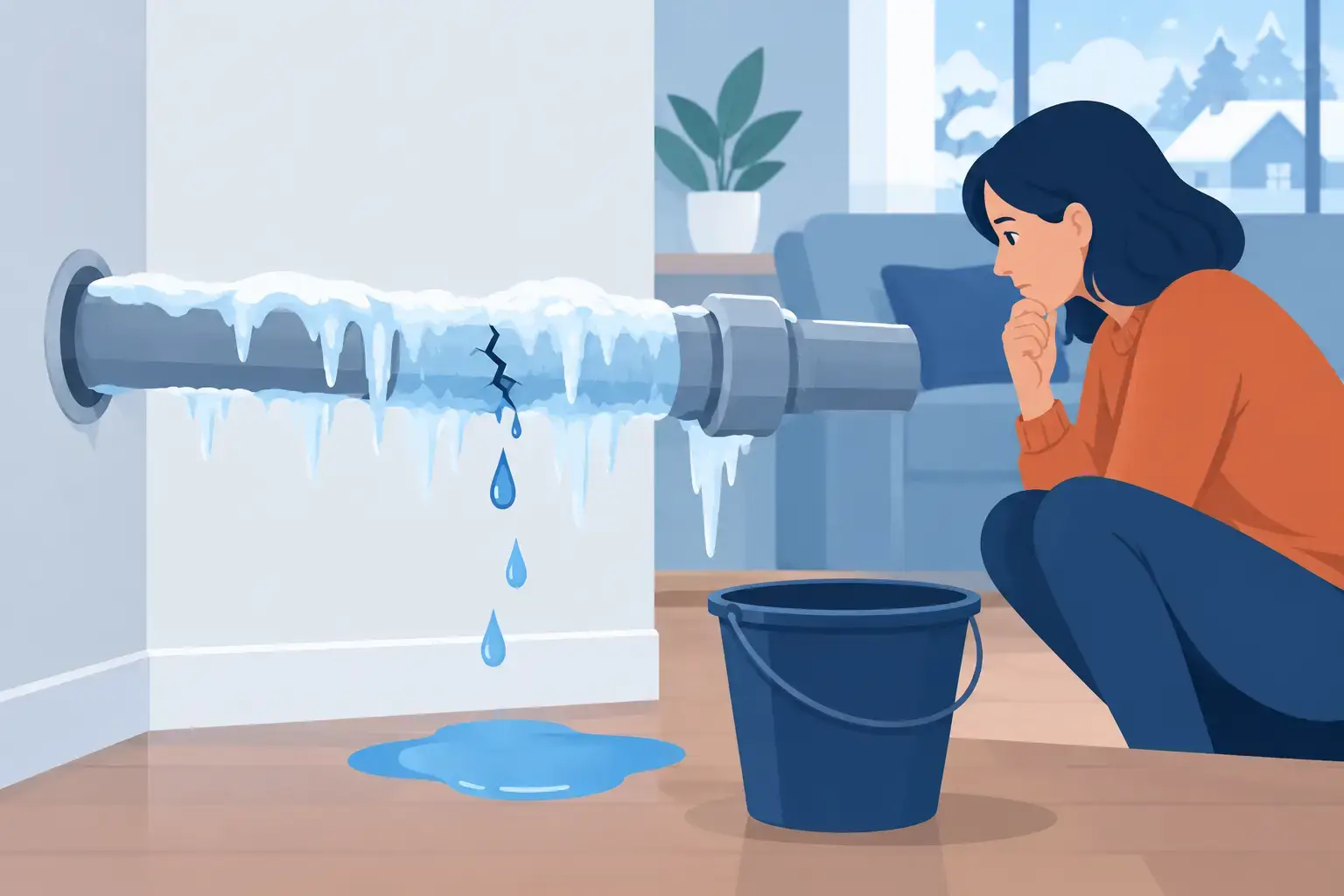
Water expands as it freezes. When that expansion happens inside a pipe, it can create enough pressure to damage the pipe itself or a nearby fitting, joint or valve. The ice does not always need to form exactly where the split occurs. A blockage can trap water between the ice and a closed tap, allowing pressure to build along the pipework.
Copper pipes may split along a seam or at a joint. Plastic pipework is more flexible and can sometimes tolerate expansion better, but it is not immune to damage. Older, poorly insulated pipework is generally at greater risk, particularly where it runs through cold voids or against outside-facing walls.
Not every frozen pipe will burst, and not every burst pipe will be obvious immediately. You may notice reduced flow from a tap, no water at all, frost on an exposed pipe, odd noises from pipework or a damp patch after a thaw. If a frozen section has cracked, water may escape quickly once the ice melts – sometimes into a loft, cupboard, wall cavity or beneath a floor before anyone sees it.
Why pipes often fail during the thaw
The lowest overnight temperature is not always the moment damage becomes visible. While the pipe is frozen, ice can temporarily block the leak. As the ice thaws, water pressure returns and finds the damaged point. This is why checking your property after a freeze is just as valuable as protecting it before one.
Look carefully around exposed pipes, beneath sinks, in airing cupboards, lofts, garages and utility rooms. Check for dripping, staining, bulging pipework and a water meter that continues to move when no taps or appliances are in use. If you own a vacant property or manage a rental home, arrange regular checks during prolonged cold weather. An unoccupied home can suffer extensive damage before a small leak is spotted.
What to do if you think a pipe is frozen
Start by turning off the water supply at the internal stopcock if you can do so safely. Every household should know where this valve is, and it should be tested periodically so it does not seize when you need it. It is commonly found under the kitchen sink, near the incoming mains supply or in a utility area.
Next, open the affected cold tap slightly. This relieves pressure and gives melting water somewhere to go. If the frozen pipe is part of your hot-water or heating system, avoid attempting repairs yourself. A boiler, cylinder or central-heating pipework needs appropriate care, particularly where gas appliances and electrical components are nearby.
You can gently warm an accessible frozen water pipe using a warm towel, a hot-water bottle or a hairdryer on a low setting. Begin at the end nearest the tap and work back towards the suspected frozen section. Keep the heat moving and allow time for the ice to melt gradually.
Never use a blowtorch, naked flame or very high heat to thaw pipes. Do not pour boiling water directly over pipework either. Both can damage pipes and fittings, create a fire risk or cause rapid temperature changes that worsen a weak point. If you cannot identify the frozen section safely, or the pipe is concealed, call a qualified plumber rather than opening up walls or flooring unnecessarily.
If a pipe has burst
A burst pipe needs a quick, calm response. Turn off the stopcock immediately, then switch off the heating system if the leak involves heating pipework. If water is close to sockets, appliances or wiring, do not touch electrical equipment or stand in water. Switch off electricity at the consumer unit only if it is safe to reach without contact with water. Otherwise, keep clear and seek urgent help.
Once the water is isolated, open cold taps to drain remaining water from the system. Catch drips with towels or containers where possible and move furniture, rugs and valuables away from the affected area. Take photographs of visible damage for your insurer before extensive clean-up begins.
A temporary wrap or repair tape may reduce a small drip, but it is not a dependable repair for a split or failed joint. The damaged section must be properly assessed and replaced, then the pipework tested before the water supply is restored. Plumbing Bend Heating Service Ltd can help identify the cause, carry out a lasting repair and check for related frost damage elsewhere in the system.
Preventing frozen pipes in cold weather
Prevention is usually far less disruptive than dealing with a thawed-out leak. Insulate accessible pipework in lofts, garages, cupboards, outbuildings and other unheated areas with suitable pipe lagging. Insulation slows heat loss, but it cannot compensate for a property that is left without heating during severe weather.
Keep your heating on at a low, consistent temperature when frost is forecast, including when you are away. Turning it completely off to save money can prove expensive if a pipe freezes. In a home with rooms that are rarely used, leave internal doors open occasionally so warmer air can circulate around pipework. Kitchen and bathroom cupboard doors can also be left open in very cold conditions, provided this is safe for children and pets.
Outdoor taps should be isolated and drained before winter where possible. Garden hoses need disconnecting, as trapped water can freeze and damage both the hose and the tap connection. Check that loft hatches close properly and that gaps around pipes entering external walls are sealed, while allowing appropriate ventilation for the property.
For landlords and managers, clear instructions make a genuine difference. Tenants should know where the stopcock is, how to report a loss of water flow and why maintaining reasonable heat in the property matters. Properties left empty between lets need a specific winter plan, which may include draining down water systems where suitable or arranging regular inspections.
When to call a plumber
Call for professional assistance if you can see a split pipe, water is leaking, the frozen pipe is inaccessible, or there is any uncertainty around your boiler or central-heating system. You should also seek help if water pressure remains poor after a thaw, as ice can damage valves and joints without producing an immediate major leak.
A qualified engineer can isolate the correct section of pipework, repair the fault, inspect vulnerable areas and advise on insulation or heating changes that suit your property. This is particularly worthwhile in rural homes, period properties and larger buildings where pipework may run through several cold spaces.
Frozen pipes are stressful, but prompt action limits the damage. Know where your stopcock is before the next cold spell, keep vulnerable areas protected, and arrange help quickly if water stops flowing or appears where it should not.