
Radiators Cold at the Bottom? Fix the Cause
A radiator that is hot across the top but cool or completely cold along the bottom is not just frustrating on a chilly Gloucestershire morning. When radiators cold at the bottom are affecting your home, the usual cause is a build-up of sludge restricting the flow of hot water. Left alone, it can make rooms slower to warm, raise heating bills and place unnecessary strain on your boiler and pump.
The good news is that the pattern of cold spots often gives a clear clue about the fault. Some checks are safe to make yourself, but a lasting repair may need a qualified heating engineer, particularly if the issue affects several radiators or your boiler is losing pressure.
Why are radiators cold at the bottom?
Central heating water circulates through radiators, transferring heat into each room before returning to the boiler. Over time, tiny particles of rust, limescale and debris can settle in the lower channels of a radiator. This dark, gritty material is commonly called heating sludge.
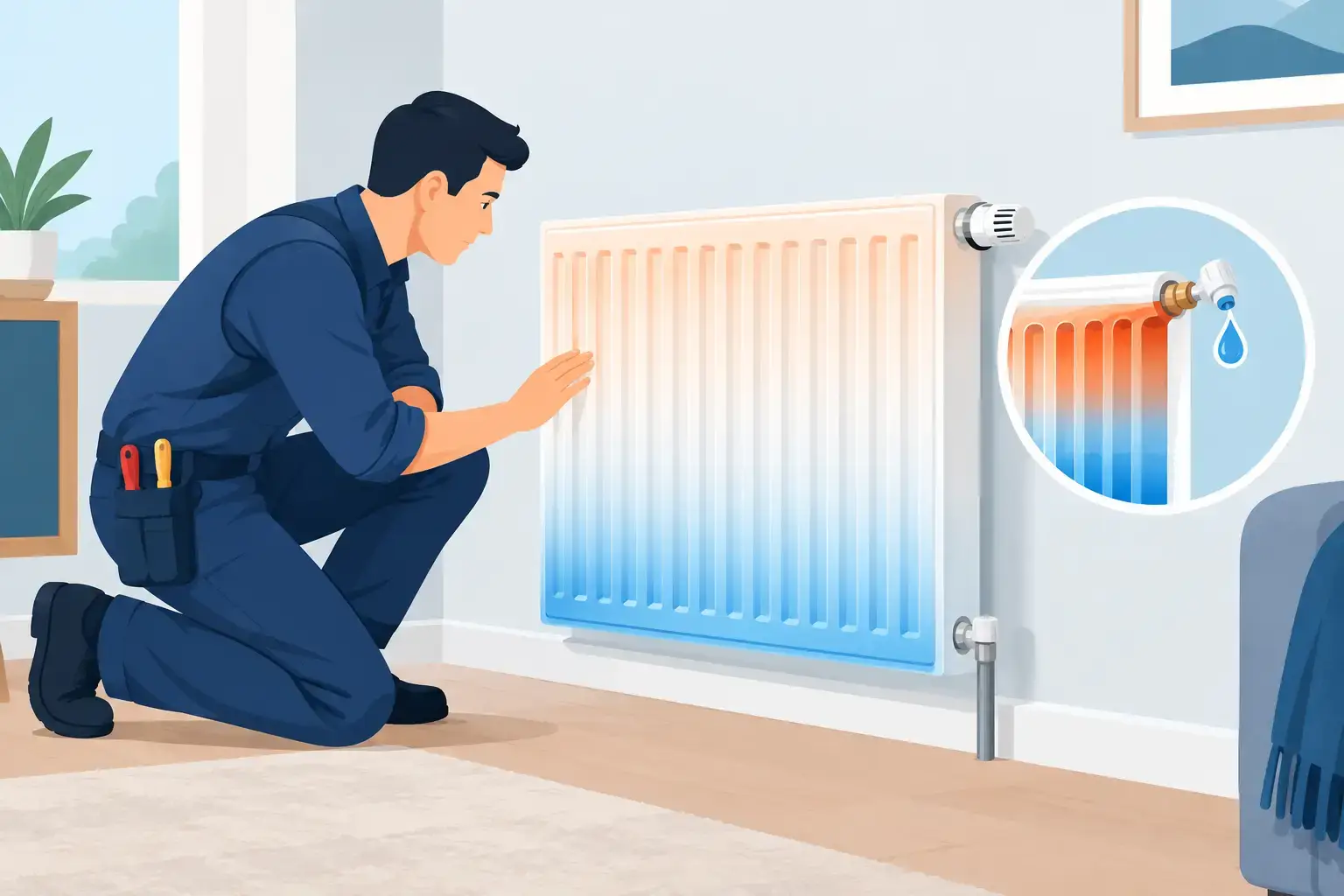
Because the debris falls and collects at the bottom, hot water cannot circulate properly through the whole radiator. The top may still feel warm while the lower section stays cool. In more advanced cases, a radiator can be warm only near the inlet valve, with the rest of it noticeably colder.
Sludge is more common in older heating systems, but it can develop in newer systems too. Corrosion inside pipes and radiators, untreated system water, repeated leaks and frequent top-ups can all contribute. Homes with a mix of old and new radiators may be particularly prone to the problem.
A cold bottom is different from a radiator that is cold at the top. Cold at the top generally indicates trapped air, which can often be released by bleeding the radiator. Bleeding a radiator with sludge at the bottom will not remove the debris, and doing it repeatedly may lower system pressure without solving the underlying issue.
Check the heating pattern before taking action
Turn the heating on and allow the system enough time to reach normal temperature. Carefully feel the radiator surface without touching exposed pipework or valves that may be very hot. Compare the temperature at the top, middle and bottom.
If it is cold at the top and warmer below, trapped air is likely. If it is consistently cold at the bottom while the top is hot, sludge is the more likely explanation. If the entire radiator is cold, check that both valves are open and that the thermostat is turned up. A stuck thermostatic radiator valve, circulation issue or balancing problem could be involved.
It is also useful to look at the wider system. One radiator with a cold lower section may be a localised build-up. Several radiators showing the same symptoms can point to system-wide contamination or poor circulation. Noisy pipes, banging radiators, brown water when bleeding and a boiler that regularly needs repressurising are further signs that the heating system needs professional attention.
Safe checks you can make at home
Start with the simple checks before assuming the radiator needs removing. Make sure the thermostatic valve is set above room temperature and the lockshield valve at the other end has not been closed accidentally. If you have recently moved furniture, fitted a radiator cover or changed a thermostat setting, check that heat can circulate freely around the room.
If the radiator is cold at the top, bleeding may help. Switch off the heating and allow the system to cool before using a radiator key. Open the bleed valve slowly with a cloth or container beneath it. Air may hiss out first, followed by a small amount of water. Close the valve once water appears, then check the boiler pressure and top it up only if your boiler instructions say this is appropriate.
Do not bleed radiators simply because they are cold at the bottom. It is unlikely to shift sludge and could create an avoidable pressure issue. If you have a sealed system and are unsure how to restore pressure safely, arrange an engineer visit rather than guessing.
Avoid removing a radiator yourself unless you are confident dealing with heating water, isolation valves and possible leaks. Draining a radiator can be messy, and old valves do not always reseal properly. Water from a sludged system can also stain carpets, flooring and walls.
When one radiator needs cleaning
Where only one radiator is affected and the rest of the system heats evenly, removing and flushing that radiator may be the right solution. An engineer will isolate it, drain it carefully, take it outside where practical and flush out the debris until the water runs clear. The radiator can then be refitted, the system repressurised and checked for leaks.
This approach can be effective, but it has limits. Flushing a single radiator does not deal with sludge elsewhere in the pipework, boiler or other radiators. If contamination has already spread through the system, the same problem may return. The condition of the radiator also matters. A heavily corroded unit may be better replaced than cleaned, especially if it has started weeping or has repeated cold spots.
When a powerflush is the better answer
A professional powerflush is designed to clean the central heating system as a whole. A specialist machine circulates water and cleaning chemicals through the system at controlled flow rates, helping to lift sludge and debris from radiators and pipework. Engineers may use magnetic tools and targeted agitation to improve results in stubborn areas.
Powerflushing is often recommended when multiple radiators are cold at the bottom, the boiler is noisy, heating takes too long to warm up or radiator water is heavily discoloured. It can improve heat distribution, reduce strain on components and help restore efficiency.
It is not automatically the right answer for every system. Very old, fragile pipework and radiators need assessment first, as cleaning can expose pre-existing weaknesses such as corroded joints or failing valves. A responsible engineer will inspect the system, discuss its condition and explain whether a targeted radiator flush, powerflush, repair or replacement offers the best value.
After cleaning, inhibitor should be added to the system water. This treatment slows internal corrosion and helps prevent fresh sludge forming. For suitable systems, a magnetic filter can also capture circulating metallic debris before it reaches the boiler. These measures are particularly worthwhile after a new boiler installation or a major clean, as they help protect the investment.
Could the boiler be the cause?
Sometimes poor radiator performance is linked to a boiler or circulation fault rather than sludge alone. A failing pump may not move water around the system effectively. A blocked filter, stuck valve, incorrect system pressure or poor heating controls can also leave rooms feeling cold.
If your boiler shows an error code, makes unusual noises, loses pressure repeatedly, leaks, or switches itself off, do not focus only on the radiators. Book a qualified heating engineer to diagnose the full system. Never remove a boiler casing or attempt work on gas components yourself. Gas Safe work must always be carried out by an appropriately registered engineer.
Prevent cold spots from returning
The best prevention is regular heating maintenance rather than waiting for rooms to stop warming properly. Annual boiler servicing can identify circulation concerns early, while occasional checks of radiator heat patterns can catch developing problems before they become widespread.
Try to avoid repeatedly topping up a sealed heating system. Fresh water introduces oxygen and minerals, which can accelerate corrosion. If pressure keeps dropping, there may be a leak or an issue with the expansion vessel that needs investigating. For landlords and property managers, responding early to reports of uneven heating also helps prevent tenant discomfort and more costly repairs later.
Plumbing Bend Heating Service Ltd can assess cold radiators, circulation faults and sludge throughout homes and properties across Cheltenham, Gloucestershire and the surrounding areas. A proper diagnosis means you are not paying for a flush, replacement or repair that does not match the actual fault.
A radiator should heat evenly from top to bottom and warm the room without making the boiler work harder than necessary. If yours does not, arrange an inspection before a small cold patch turns into a wider heating problem.