
Water Pressure Problems: Causes and What to Do
A shower that slows to a trickle when someone opens a tap downstairs is more than an everyday annoyance. Water pressure problems can make washing, cleaning and cooking difficult, while a sudden change in pressure may point to a leak, failing valve or fault within the water system. Knowing what to look for helps you act quickly and avoid unnecessary damage.
The first step is to work out whether the problem affects the whole property or only one outlet. A weak kitchen tap, for example, often has a different cause from poor flow at every tap, shower and appliance. The right repair depends on the type of system in your home, the age of the pipework and whether the issue is on the incoming mains supply or within your internal plumbing.
Water pressure problems: start with the pattern
Pressure and flow are often used as though they mean the same thing, but they are not quite identical. Pressure is the force pushing water through the pipes. Flow is the volume of water that comes out over a given time. A partially blocked tap aerator can reduce flow at one tap even when the incoming water pressure is perfectly adequate.
Try each cold tap in the property, then each hot tap. Check whether the shower changes when another tap runs, and whether the issue happens at certain times of day. If the cold supply is weak throughout the house, the cause may be the mains supply, a stopcock, a pressure-reducing valve or restricted pipework. If only the hot water is affected, attention usually turns to the boiler, cylinder, pump, valves or hot-water pipework.
It is also worth asking immediate neighbours whether they have noticed a similar issue. A local supply fault, planned works or a burst water main can affect several properties at once. Your water supplier can confirm known interruptions, but a continuing fault inside your property needs a qualified plumber to investigate.
Common causes of low water pressure
A stopcock that is partly closed
The internal stopcock controls the water entering your home and is commonly found under the kitchen sink, in a utility area or close to where the main pipe enters the building. If it has been knocked, closed during previous work or become stiff with age, it may not be fully open.
You can check that it has not been accidentally turned down, but do not force a seized stopcock. Old valves can fail when disturbed, creating a leak just when you are trying to solve a pressure issue. An engineer can replace it safely if needed.
Blocked tap aerators and shower heads
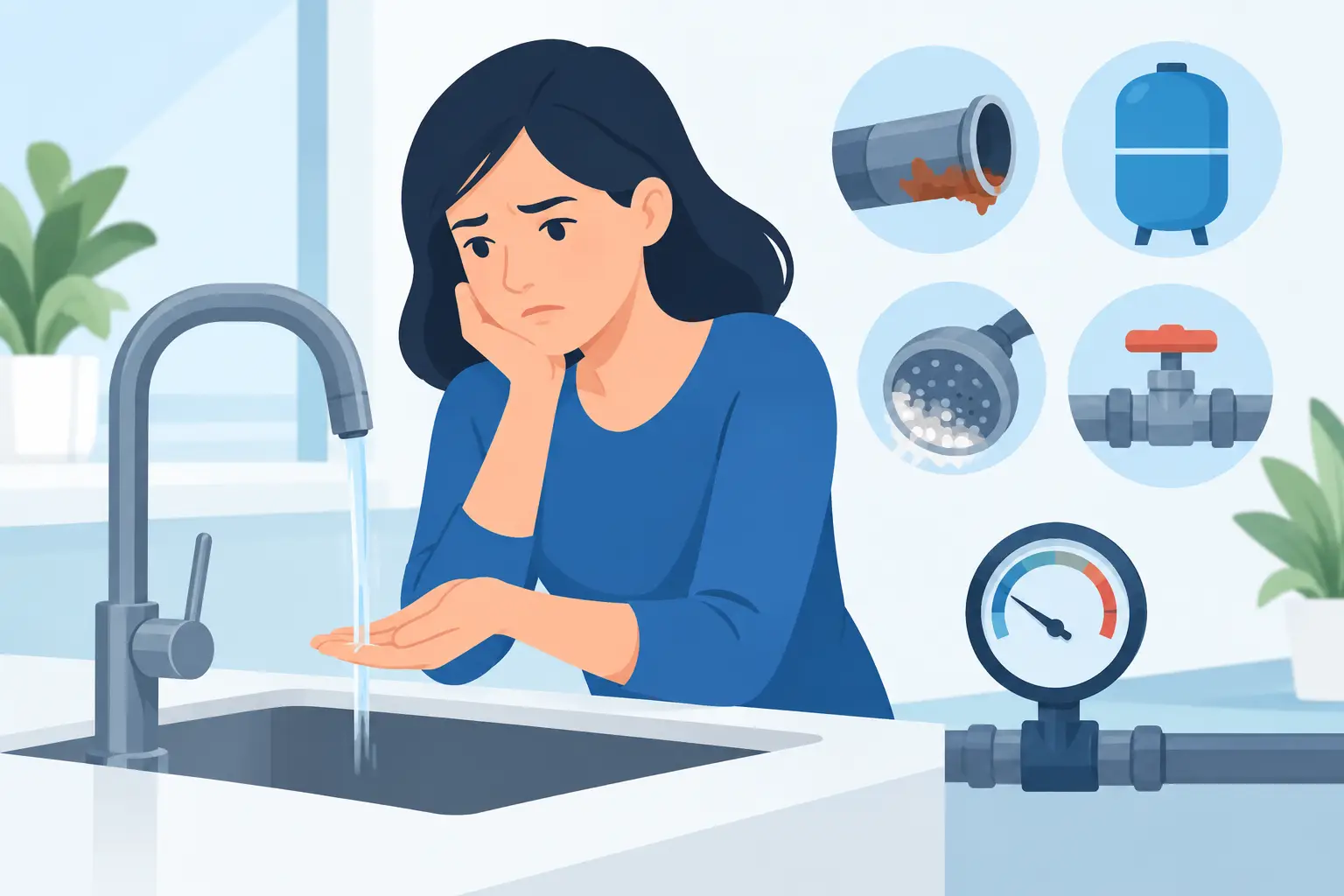
Limescale and debris are particularly common in hard-water areas across Gloucestershire and the Cotswolds. If one tap has poor flow while the others are normal, the small mesh aerator at the end of the spout may be blocked. Shower heads can suffer the same problem.
Cleaning or replacing these fittings may restore normal flow. However, debris returning after cleaning can indicate corrosion, scale or disturbance in the pipework, so it should not be ignored if the fault keeps coming back.
Restricted or ageing pipework
Older properties may have narrow, corroded or poorly altered pipes. Over time, internal build-up can reduce the usable bore of the pipe and restrict the amount of water reaching taps and appliances. This is often noticeable at the furthest outlets or when more than one tap is used.
Pipework changes can be more involved than replacing a fitting, especially in period homes. A proper assessment avoids spending money on a pump or new shower when the real restriction lies in the supply pipe.
A fault with the pressure-reducing valve
Some homes have a pressure-reducing valve, sometimes called a PRV, to protect pipework and appliances from excessive incoming mains pressure. These valves can wear out or become blocked. When they fail, the result may be low pressure, fluctuating flow or unusually high pressure.
This is not a component to adjust at random. Incorrect settings can place stress on taps, flexible hoses, washing machines and other parts of the system. A plumber can test the pressure and decide whether the valve needs cleaning, adjustment or replacement.
Leaks in the property
A hidden leak can reduce available pressure and waste a significant amount of water. Look for damp patches, staining, mould, a constantly moving water meter when all outlets are off, or the sound of water running where it should not be.
If you suspect a leak, turn off the water at the stopcock if it is safe to do so and arrange urgent assistance. Water escaping beneath floors, behind walls or in ceilings can cause costly damage quickly.
Why hot water and shower pressure can be different
Many homes have a combination boiler, which heats mains water directly for hot taps and showers. With this system, weak hot-water flow may be caused by a blocked filter, a scaled heat exchanger, a restrictive valve or a boiler fault. The boiler may still produce hot water, but not at the volume you expect.
Homes with a hot-water cylinder and cold-water storage tank may use a gravity-fed system. Here, pressure depends partly on the height of the tank above the outlet. An upstairs shower may perform reasonably while a powerful shower downstairs needs a suitable pump. Pump selection matters: fitting the wrong type can be noisy, ineffective or damaging to the system.
A mixer shower needs balanced hot and cold supplies. If one side has much stronger pressure than the other, the shower can run too hot, go cold suddenly or deliver very little water. A thermostatic shower valve may need servicing, but the underlying imbalance must also be addressed.
Do not confuse low water pressure with low boiler pressure. The pressure shown on a sealed central-heating boiler relates to the heating circuit, not the pressure at your taps. If the boiler pressure repeatedly drops, it could indicate a heating-system leak or another fault and should be checked by a qualified engineer.
High pressure and sudden surges need attention too
Not all water pressure problems involve weak flow. Excessively high pressure can cause banging pipes, dripping taps, toilet cistern faults and repeated failures of appliance hoses or valves. You may also hear a thump when a tap or washing machine valve closes. This can be water hammer, where a sudden stop in flow creates a pressure shock through the pipes.
High pressure can be difficult to diagnose without the correct equipment. It may vary at different times, particularly where the incoming mains supply changes. A plumber can measure the static and running pressure, inspect the PRV where fitted, and recommend a lasting fix rather than replacing damaged fittings one by one.
Safe checks before you call a plumber
A few simple observations make a visit more efficient. Note when the issue started, which taps are affected and whether it is hot, cold or both. Check that your stopcock has not been accidentally moved, and look for visible leaks around exposed pipes, appliances and toilets.
Avoid dismantling concealed valves, altering boiler components or forcing old pipe fittings. Never remove a boiler casing or attempt repairs to gas appliances. If poor pressure is accompanied by a boiler fault code, loss of heating or hot water, or visible water near electrical equipment, switch off the affected appliance only if safe and arrange professional help.
For landlords and property managers, a pressure issue should be recorded and dealt with promptly. Persistent low flow can affect tenant comfort and may mask a leak, while high pressure can shorten the life of appliances and fittings across the property.
When professional diagnosis saves time and money
A qualified engineer can test the incoming supply, check flow rates at different outlets, inspect valves and identify restrictions without guesswork. This is particularly useful where the property has been extended, converted or altered over many years, as pipework layouts are not always straightforward.
Plumbing Bend Heating Service Ltd can investigate low, fluctuating or excessive pressure across homes and small commercial properties in Cheltenham, Gloucestershire, the Cotswolds, Bath and Stroud. The aim is not simply to improve one tap for the day, but to identify the cause and carry out a repair that protects the wider system.
If the pressure has changed suddenly, there is visible damp, or water is escaping from a pipe or fitting, treat it as urgent. Acting early can protect your home, reduce water waste and return everyday comfort without allowing a small fault to become a much larger repair.