

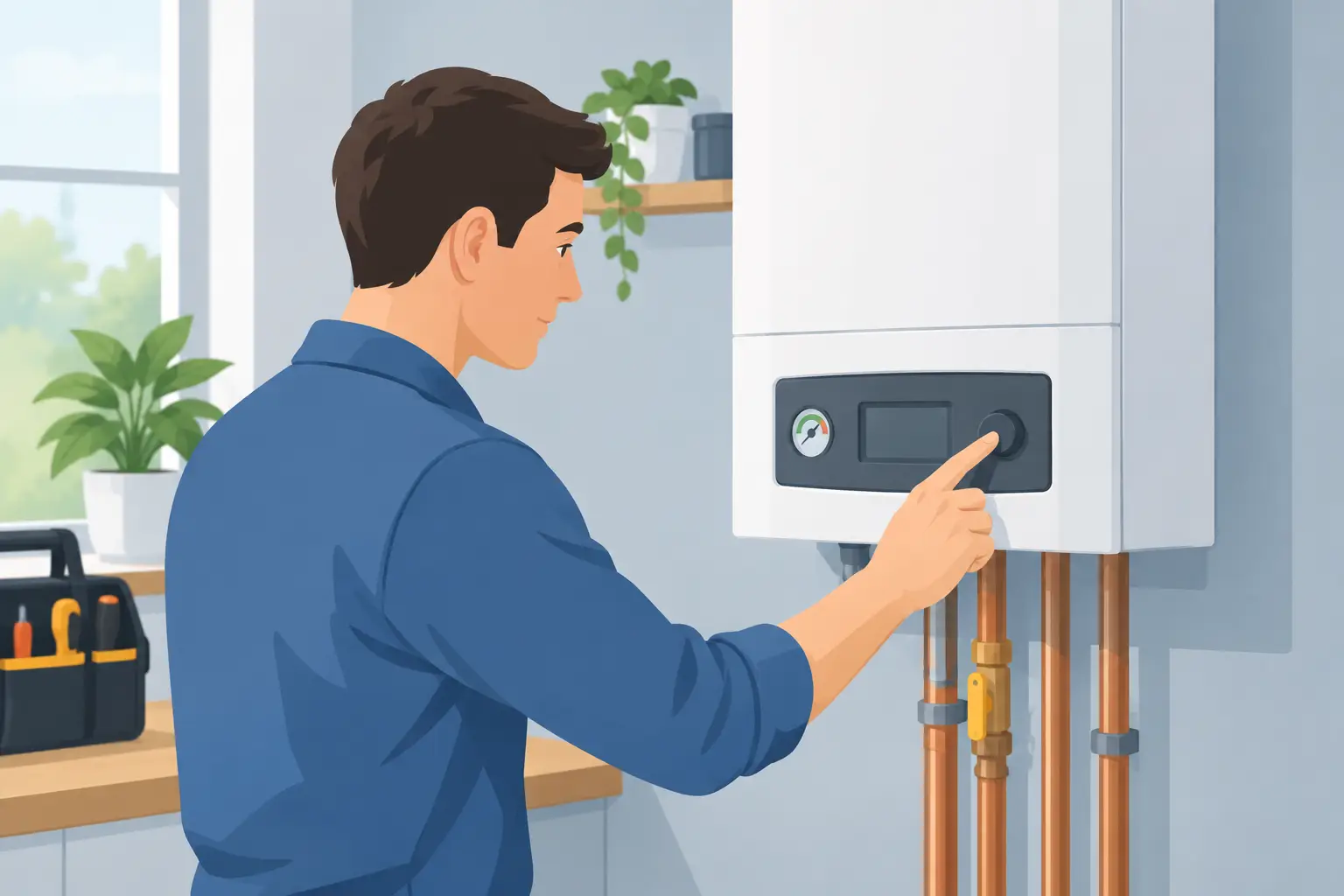
How to Reset Boiler Lockout Safely at Home
A boiler lockout often happens at the worst possible time: on a cold morning, before guests arrive, or when a tenant reports no heating or hot water. Knowing how to reset boiler lockout can sometimes get your system running again quickly, but a lockout is a safety response, not a fault to ignore. Reset it once after a few simple checks. If it locks out again, arrange professional help.
What does boiler lockout mean?
A boiler enters lockout when its controls detect a condition that could prevent safe or reliable operation. Rather than continuing to fire, it shuts down and displays a warning light, flashing code, symbol or message on the control panel.
The cause may be straightforward, such as low system pressure or a temporary interruption to the gas supply. It can also point to a fault with ignition, the condensate pipe, fan, pump, sensors, flue or internal components. The exact meaning of a code varies by manufacturer and boiler model, so the boiler handbook is the right place to confirm what your display is telling you.
A reset clears the lockout instruction. It does not repair the underlying fault. That distinction matters, particularly with a gas appliance.
How to reset boiler lockout safely
Before touching the reset control, check whether there are any signs of danger. If you can smell gas, feel unwell, notice black staining around the boiler, or a carbon monoxide alarm is sounding, do not reset the boiler. Turn off the appliance if it is safe to do so, open doors and windows, leave the property, and contact the National Gas Emergency Service on 0800 111 999. Do not use electrical switches, naked flames or anything that could create a spark.
If there are no warning signs, follow this sensible process.
Check the display and note the fault code
Write down the code or take a clear photograph before resetting. This is useful if the boiler locks out again and gives a Gas Safe engineer a better starting point. Some codes identify low pressure or a frozen condensate pipe, while others require an engineer without further homeowner checks.
Check that the boiler has power and gas
Make sure the boiler’s electrical supply is switched on and that no circuit breaker has tripped. If the display is blank, the issue may be the electrical supply rather than a boiler lockout.
If you have other gas appliances, check whether they are working as normal. A prepayment gas meter may need topping up. Do not remove the boiler casing or attempt to adjust internal gas controls.
Check the system pressure when the boiler is cold
Most sealed central-heating systems should usually read around 1 to 1.5 bar when cold, although your manufacturer’s instructions take priority. If the pressure is below about 1 bar, the boiler may refuse to operate.
Some systems can be repressurised using an external filling loop or a built-in filling key. Only do this if you know which controls belong to the filling arrangement and have the instructions for your model. Add water gradually and stop at the recommended pressure. Overfilling can cause a different problem, and pressure that repeatedly drops is a sign of a leak or system fault that needs attention.
Press the reset button once
The reset button may be marked “reset”, shown as a flame symbol, or operated by holding a button or turning a selector dial. On many boilers, press and hold it for a few seconds, then wait while the appliance completes its start-up sequence. This can take several minutes.
Avoid pressing reset repeatedly. One reset after basic checks is reasonable. Two attempts at most may be appropriate if the handbook specifically advises it, but repeated resets can mask a developing fault and place extra strain on the boiler.
Common reasons a boiler goes into lockout
Low pressure is one of the most common causes, especially after radiators have been bled or where a small leak is present somewhere in the heating system. You may notice cold radiators, drips from pipework, a damp patch near a radiator valve, or water escaping from the external pressure relief pipe. These are all reasons to book a repair rather than continually topping up the system.
Frozen condensate pipes are another frequent winter issue. Modern condensing boilers produce acidic water, known as condensate, which runs through a pipe to an internal or external drain. If an external section freezes, the boiler can lock out. If the condensate pipe is accessible and clearly frozen, it can often be thawed carefully using warm water – never boiling water – poured over the pipe. Take care around slippery surfaces and do not interfere with pipework you cannot safely reach.
Ignition and flame-detection faults can also trigger lockout. These may be related to a temporary gas interruption, but can involve components that must only be checked by a qualified Gas Safe engineer. The same applies to fan, flue, circulation pump and overheating faults.
In some cases, the boiler is responding to a wider heating-system problem. Sludge, restricted circulation, a failing pump or a blocked heat exchanger can cause overheating and shutdown. The boiler may reset and run briefly, but the fault will return until the cause is properly diagnosed.
When not to reset your boiler
There are situations where resetting is not the right response. Do not try to reset the boiler if the pressure gauge is in the red, water is leaking from the boiler, the case is damaged, or the display shows a serious safety-related warning described in the manual.
You should also stop and call an engineer if the boiler locks out more than once, makes loud banging or whistling noises, loses pressure regularly, or produces unreliable heating and hot water. Landlords should treat recurring lockouts promptly, both to protect the property and to maintain a safe, usable heating system for tenants.
Never remove the boiler cover to investigate. The sealed casing protects essential components, and work on gas appliances, combustion parts and flues must be carried out by a Gas Safe registered engineer.
A quick fault-check before you call
A little information can make a repair visit more efficient. Have the boiler make and model, fault code, system pressure reading, and a brief description of what happened before the lockout. For example, mention whether the heating stopped after a power cut, during freezing weather, after you bled radiators, or when hot water was running.
It also helps to say whether the boiler fires briefly before stopping, whether any radiators are leaking, and whether other gas appliances are affected. Do not worry if you do not know the technical details. A clear description of the symptoms is enough.
Preventing future boiler lockouts
Annual boiler servicing is the most practical way to reduce unexpected lockouts. A service allows an engineer to check safe combustion, clean and inspect key components, assess the flue, identify wear, and spot pressure or circulation problems before they become a no-heating call-out.
Keep an eye on pressure between services and deal with small leaks early. If your property has an external condensate pipe, make sure it is properly insulated, particularly in exposed areas of Gloucestershire and the Cotswolds where overnight temperatures can fall sharply. Older central-heating systems may also benefit from cleaning, inhibitor treatment or powerflushing where poor circulation and sludge are contributing to repeat faults.
A boiler that locks out once may need nothing more than a correct reset. A boiler that locks out again is asking for attention. Plumbing Bend Heating Service Ltd can diagnose the cause, carry out safe repairs and help restore dependable heating and hot water without guesswork.