
Heating Engineers: When to Call and What to Expect
A boiler that cuts out halfway through a shower, cold radiators in the children’s bedrooms, or a pressure gauge that keeps dropping are not problems to put off. Qualified heating engineers can identify the cause, make the system safe and help prevent a small fault becoming a costly breakdown – particularly when your heating is working hardest.
For homeowners, landlords and property managers, the aim is straightforward: keep the property warm, the hot water reliable and the running costs under control. Knowing when to call a professional, and what a proper visit should involve, makes that much easier.
What heating engineers do
Heating engineers work on the systems that provide warmth and hot water to a property. Their work can include boiler repairs and servicing, central-heating installations, radiator upgrades, heating controls, underfloor heating, heat pumps and system cleaning. Many also deal with related plumbing work, which is useful when a heating fault involves pipework, leaks, pumps or water pressure.
Where gas appliances are involved, the engineer must be Gas Safe registered and qualified for the type of work required. This is not simply a preference. Boilers, gas fires and gas pipework need to be worked on safely and correctly. A competent engineer will check the appliance, diagnose the fault rather than guess at it, and explain the repair in plain language before work goes ahead.
The right solution depends on the age of your system, its condition and how you use the property. A modern combi boiler in a compact Cheltenham home has different demands from a larger rural property with a conventional boiler, cylinder and several bathrooms. There is no one-size-fits-all repair or replacement.
When should you call a heating engineer?
Some faults are obvious emergencies. If you smell gas, suspect a carbon monoxide issue, see soot or scorching around an appliance, or have no heating or hot water during cold weather, seek help without delay. Turn off the appliance if it is safe to do so, follow the relevant safety advice, and arrange professional assistance.
Other warning signs can be less dramatic but still deserve attention. Repeated boiler lockouts, banging or whistling noises, radiators that stay cold at the bottom, fluctuating water temperature and a boiler that regularly loses pressure can all point to an underlying issue. Leaving these symptoms unresolved may increase energy use and place extra strain on components.
A leaking boiler or heating pipe also needs prompt attention. Even a slow drip can damage flooring, cupboards or ceilings over time. In a managed property, swift action protects both the building and the tenant’s comfort. For landlords, keeping heating and hot water systems maintained is also an essential part of meeting property responsibilities.
Problems you may be able to check first
Before booking a visit, there are a few simple checks that can save time. Make sure the thermostat is turned up and has working batteries, check that the boiler has power, and look at the pressure gauge if you know where it is. Your boiler manual may also explain the meaning of an error code.
Do not remove the boiler casing, interfere with gas connections or attempt repairs beyond basic user controls. Resetting a boiler once in line with the manufacturer’s instructions can be reasonable. If it locks out again, there is a reason, and an engineer should investigate it.
What to expect from a professional visit
A reliable heating repair starts with questions. The engineer may ask when the problem began, whether it affects heating, hot water or both, and whether any error code has appeared. Details such as recent pressure loss, unusual noises or changes after decorating work can help narrow down the fault.
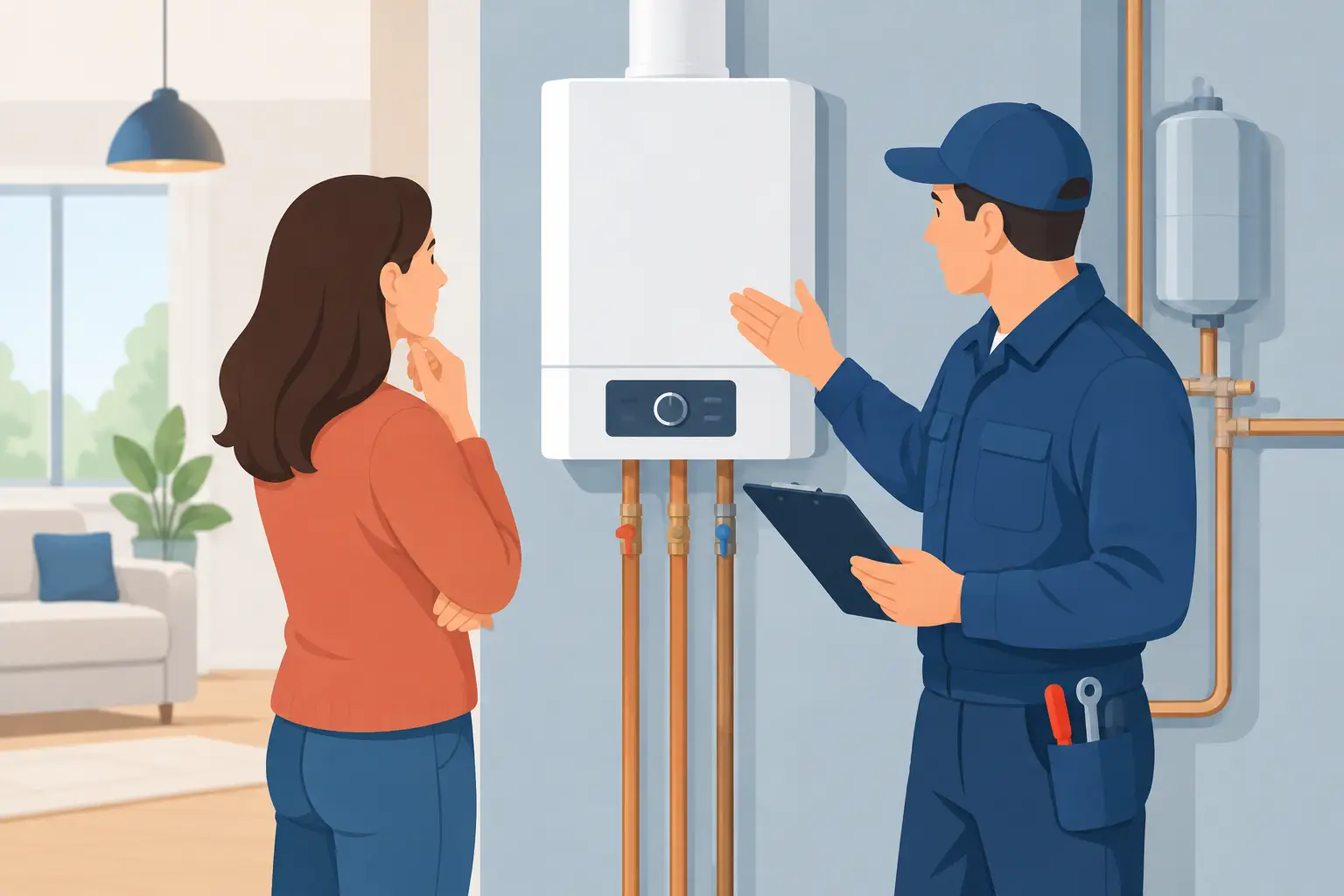
On site, they should inspect the relevant parts of the system and carry out suitable tests. Depending on the issue, this might include checking boiler pressure, circulation, controls, pumps, valves, flue operation and system water quality. Gas-related work requires the appropriate safety checks.
You should receive a clear explanation of the findings. Sometimes the answer is a straightforward replacement part. At other times, the fault may be linked to sludge in the system, a failing pump, poor controls or an older boiler nearing the end of its useful life. Good advice includes the trade-off: a repair may restore operation now, while replacement may offer better reliability and efficiency over the longer term.
Transparent pricing matters here. You should understand what the visit covers, whether parts are required and what options are available before authorising significant work. For planned installations, a proper quotation should account for the property, existing pipework, heat demand and the type of system being installed – not just the boiler model.
Why annual boiler servicing is worth arranging
A boiler can appear to be working normally while developing issues that reduce efficiency or affect safe operation. Annual servicing gives a qualified engineer the opportunity to inspect the appliance, clean and test relevant components, check the flue and confirm that it is operating as it should.
Servicing is particularly valuable before winter, when demand on the system rises and appointments can be harder to secure after a cold spell. It can also support manufacturer warranty requirements, although you should check the terms for your specific boiler.
A service is not a guarantee that a future part will never fail. Wear-and-tear components can still develop faults. However, regular maintenance gives you a better chance of catching problems early and keeps the system operating as efficiently as its condition allows.
For landlords, annual gas safety checks are a separate legal requirement for relevant gas appliances. A service may be arranged at the same time, but they are not automatically the same thing. Ask your engineer what is included so your records are correct.
Repair, improve or replace?
When a boiler fails, the immediate priority is often getting heating and hot water back. That does not always mean replacement is the right choice. If the appliance is relatively modern, has been maintained and needs a sensible repair, fixing it can be the most cost-effective option.
Replacement becomes worth considering when breakdowns are frequent, spare parts are becoming difficult to source, repair costs are rising or the boiler is no longer suitable for the household. A growing family, a loft conversion or an additional bathroom can change hot-water demand considerably. A system that was once adequate may no longer deliver the comfort you need.
It is also worth looking beyond the boiler itself. Smart controls, correctly sized radiators, thermostatic radiator valves and system cleaning can all improve how heat is distributed and controlled. In suitable properties, heat pumps and underfloor heating may be practical options, but they need careful design. Insulation levels, emitter sizing and the building’s heat loss all affect performance.
A powerflush may be recommended where sludge and debris are restricting circulation, causing cold spots or contributing to repeated component failures. It is not necessary for every heating system, so the recommendation should be based on the condition of your system rather than offered as a routine add-on.
Choosing local heating engineers with confidence
Qualifications and registration are essential, but practical communication matters too. You want an engineer who arrives when agreed, treats your home with care and gives you a clear answer about what has gone wrong. For urgent faults, availability and a realistic timescale are just as important as technical knowledge.
Ask whether the engineer is qualified for your appliance and fuel type, whether they can provide a written quotation for larger work, and what guarantee applies to parts or installation. If you manage several properties, it is helpful to work with a contractor able to handle routine servicing, responsive repairs and wider plumbing or heating improvements without passing you between different trades.
At Plumbing Bend Heating Service Ltd, the focus is on fast, dependable work across boilers, central heating, plumbing and wider comfort systems throughout Cheltenham, Gloucestershire and surrounding areas. Whether the job is an urgent repair or a planned upgrade, the objective remains the same: safe operation, clear advice and a solution built to last.
If your heating is showing early signs of trouble, arranging a professional check before the next cold spell can spare you an inconvenient breakdown when you need warmth and hot water most.