

Gas Appliance Safety Signs You Should Act On
A boiler that has started making unusual noises, a cooker flame that looks yellow rather than blue, or a room that feels stuffy whenever the fire is on should never be ignored. Most gas appliances work safely and efficiently for years, but faults can develop gradually and are not always obvious. Knowing what to look for gives you time to act before a small issue becomes a serious risk.
Gas appliance safety starts with safe everyday use
Gas boilers, cookers, hobs, fires and water heaters are safe when they are correctly installed, properly ventilated and regularly maintained. The key is not trying to diagnose or fix a gas fault yourself. Your role is to notice changes, use the appliance sensibly and call a Gas Safe registered engineer when something does not seem right.
Keep air vents, grilles and flues clear. They are there to bring in fresh air and allow combustion gases to leave the property safely. Blocking a vent to stop a draught, covering a boiler cupboard grille, or storing items around an appliance can affect how it operates.
A boiler cupboard should not become a general storage area. Paint, aerosols, laundry and household items can restrict access for servicing, reduce airflow or create a fire risk. Leave the area around your boiler clear, and make sure any external flue terminal is not obstructed by plants, rubbish or building materials.
For gas hobs and cookers, stay nearby while food is cooking and turn controls fully off when finished. Never use a gas cooker or oven to heat a room. It is not designed for that purpose and can lead to dangerous levels of combustion gases indoors.
Warning signs that need prompt attention
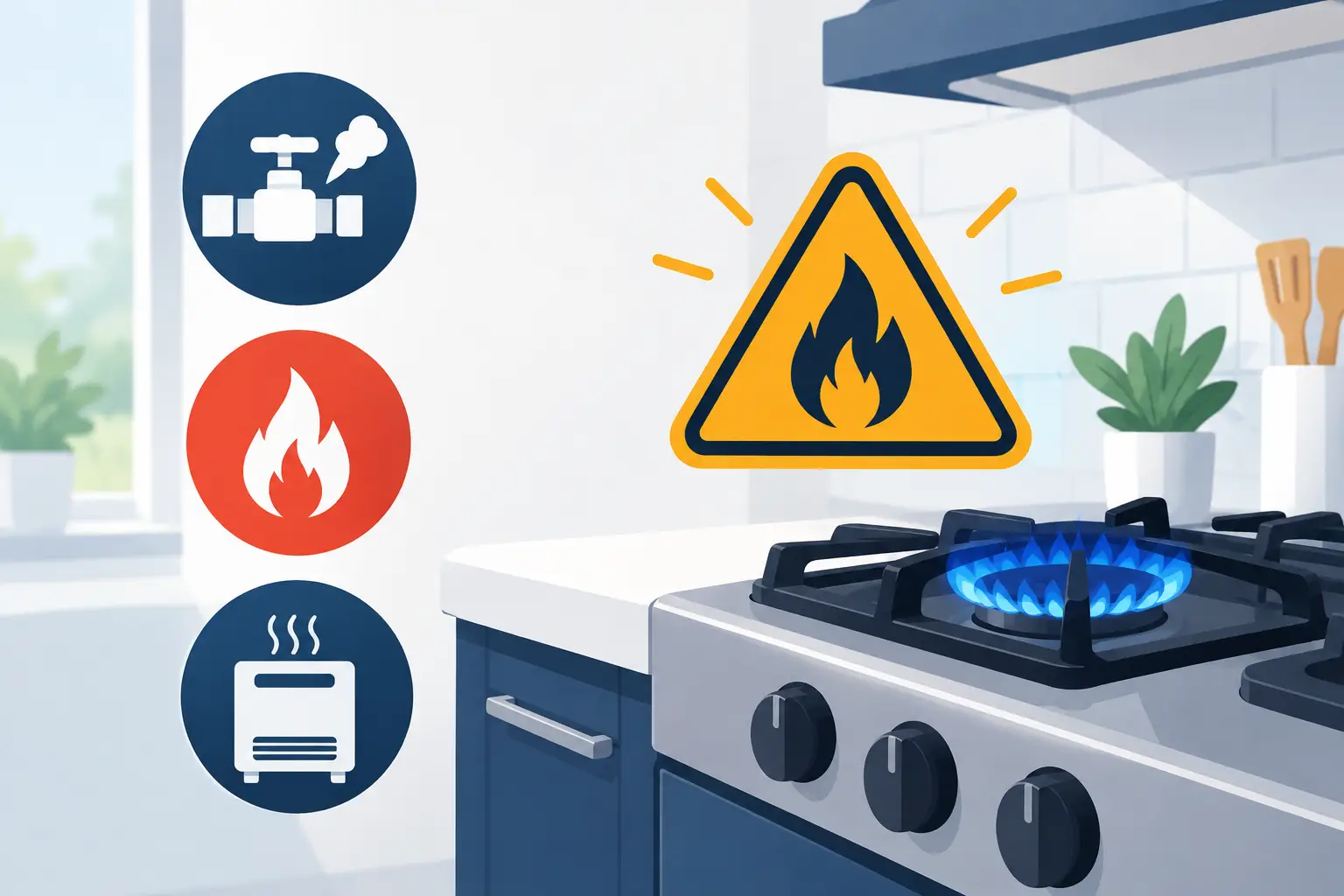
A properly burning natural gas flame should generally be crisp and blue. A yellow or orange flame, apart from occasional small orange flickers caused by dust, may point to incomplete combustion. This needs checking by a qualified engineer, especially if it is accompanied by soot, staining or an appliance that is not performing as it should.
Other signs to take seriously include:
- Black marks, soot or brown staining around an appliance, flue or nearby wall
- Persistent condensation in the room when the appliance is in use
- Pilot lights that frequently go out, where your appliance has one
- Unusual smells, banging, whistling or rattling from a boiler or fire
- Headaches, dizziness, nausea, breathlessness or unusual tiredness that improve when you leave the building
These signs do not all mean there is a gas leak or carbon monoxide present, but they do mean the appliance should not be left unchecked. A Gas Safe engineer can test the appliance, its ventilation and flue route, then explain the condition of the system in plain terms.
If you smell gas
The distinctive smell added to natural gas is designed to give you a warning. If you smell gas inside your property, do not search for the source with a flame or attempt a repair.
Put out any naked flames if it is safe to do so. Do not smoke, light matches, use electrical switches, plug in appliances or operate doorbells. Open doors and windows to ventilate the property, leave the building, and call the National Gas Emergency Service on 0800 111 999 from outside. If you know where the emergency control valve is and can safely turn it off, do so. Do not turn the gas supply back on until you have been told it is safe.
If there is a strong smell of gas, get everyone out promptly, including pets, and keep away from the property while help is arranged.
If you suspect carbon monoxide
Carbon monoxide is especially dangerous because it has no smell, taste or colour. It is produced when fuels such as gas do not burn completely. A faulty appliance, blocked flue, inadequate ventilation or poor installation can all contribute to the risk.
If a carbon monoxide alarm sounds, or anyone feels unwell and you suspect carbon monoxide, stop using the appliance if it is safe, open doors and windows, and get everyone into fresh air. Seek medical advice straight away. Call 999 in an emergency, particularly where someone has collapsed, is confused, severely breathless or unconscious. Do not use the appliance again until it has been inspected by a Gas Safe registered engineer.
Fit alarms, but do not rely on them alone
Carbon monoxide alarms are an essential safeguard, not a replacement for servicing. Fit audible alarms in rooms with fuel-burning appliances, following the manufacturer’s location instructions. Test them regularly, replace batteries where required and replace the unit at the end of its stated working life.
Choose an alarm that meets the relevant British safety standard. A reputable alarm gives valuable early warning, but it cannot tell you whether a boiler is operating efficiently, whether a flue is beginning to deteriorate, or whether an appliance needs preventative maintenance. Those checks need professional attention.
Smoke alarms and carbon monoxide alarms do different jobs. Having one does not replace the other, so make sure your property has suitable protection for both fire and carbon monoxide risks.
Why annual servicing matters
An annual gas appliance service is the practical foundation of gas appliance safety. During a service, a Gas Safe engineer checks that the appliance is burning fuel correctly, that safety devices are working, and that the flue is safely removing combustion gases. They can also identify worn components, pressure issues, leaks and early faults that might otherwise lead to a breakdown when you need heating or hot water most.
The right interval can depend on the appliance and manufacturer instructions, but an annual boiler service is usually recommended. It can help protect efficiency and may also be required to keep a manufacturer warranty valid. Servicing is not the same as a repair: an appliance can seem to be working while developing a fault that only testing will reveal.
Landlords have additional legal responsibilities. Gas appliances and flues in rented properties must receive a gas safety check at least every 12 months by a Gas Safe registered engineer. Tenants must receive a copy of the Gas Safety Record within 28 days of the check, while new tenants should receive it before they move in. Good record-keeping and early booking help avoid last-minute compliance issues.
Homeowners are not usually subject to the same annual certification requirement, but the safety case for regular servicing is no less compelling. If you have recently moved into a property and do not know when its boiler, fire or cooker was last checked, arranging an inspection is a sensible first step.
Do not treat DIY gas work as a cost-saving measure
Changing the settings on a boiler, opening up a gas fire, disconnecting a cooker or altering pipework can create risks that are not visible once the job appears finished. Gas work must be carried out by a Gas Safe registered engineer with the right competence for the specific appliance type.
This applies to planned improvements as well as faults. A kitchen refurbishment, new cooker installation, boiler replacement or conversion project may involve ventilation, flue positioning, gas supply sizing and electrical controls. Getting these details right protects the appliance’s performance and the people using the property.
If an engineer labels an appliance as unsafe or turns it off, do not reconnect or use it. The inconvenience can be frustrating, particularly in cold weather, but an unsafe appliance needs repair or replacement before it returns to service.
Keep your property prepared for an engineer visit
A little preparation makes a service or safety check more effective. Make the appliance accessible, note any error codes or changes in performance, and mention rooms that feel stuffy or show staining. If you have noticed symptoms such as headaches that occur only when the heating is on, say so clearly.
For landlords and property managers, arrange access early and encourage tenants to report concerns immediately rather than waiting for the annual check. An appliance fault rarely becomes easier or cheaper by being left for another heating season.
For homeowners across Cheltenham, Gloucestershire, the Cotswolds, Bath and Stroud, timely help is available when a gas appliance needs attention. Plumbing Bend Heating Service Ltd can inspect, service and repair gas systems through Gas Safe qualified engineering, with clear advice on the safest next step. A prompt call when something changes is often the simplest way to protect your home, your heating and the people in it.