
What to Do When a Pipe Leaks in Your Home
A leaking pipe can turn from a small drip into damaged flooring, soaked ceilings and a disrupted heating or water supply far more quickly than most people expect. Knowing what to do when a pipe leaks gives you the best chance of containing the problem while a qualified plumber gets to the cause.
The priority is simple: stop the water safely, protect your property and avoid making a temporary repair that creates a bigger fault later. Whether the leak is beneath a kitchen sink, around a radiator, in a bathroom or coming through a ceiling, calm action makes a real difference.
Stop the water at the right point
If you can clearly see where the water is coming from, first try to isolate that appliance or fitting. Many toilets, sinks, washing machines and dishwashers have a small isolation valve on the pipe supplying them. Turning the valve clockwise, usually with a flat-head screwdriver, may stop the local supply without affecting the rest of the house.
If the leak is coming from an unknown pipe, is spreading quickly or cannot be controlled at a local valve, turn off the main internal stopcock. This is often located under the kitchen sink, in a utility room, near the front door, under floorboards or beside the water meter. Turn it clockwise until it is closed.
In older Gloucestershire and Cotswold properties, stopcocks can be hidden, stiff or positioned in less obvious places. It is worth finding yours before an emergency happens and checking that it will turn. Do not force a seized stopcock hard enough to damage the pipework. If it will not move and water is escaping heavily, call for urgent plumbing assistance.
Once the supply is off, open the cold taps in the house. This releases pressure and allows remaining water in the pipework to drain away. Flush the toilet once if necessary, but do not keep running water unnecessarily while you are assessing the problem.
What to do when a pipe leaks near electrics
Water and electricity are a dangerous combination. If water is dripping through a ceiling near a light fitting, socket, consumer unit or electrical appliance, keep clear of the area. Do not touch the water, switch, fitting or any damp surface.
If you can safely reach the consumer unit without walking through water, switch off the affected circuit. If there is any doubt, leave the electrical supply alone and contact an electrician or emergency service as appropriate. Your safety comes before protecting furnishings or trying to locate the exact source.
Move portable electrical items only when they are dry and can be reached safely. Never stand on a wet floor to unplug an appliance.
Contain the water and reduce damage
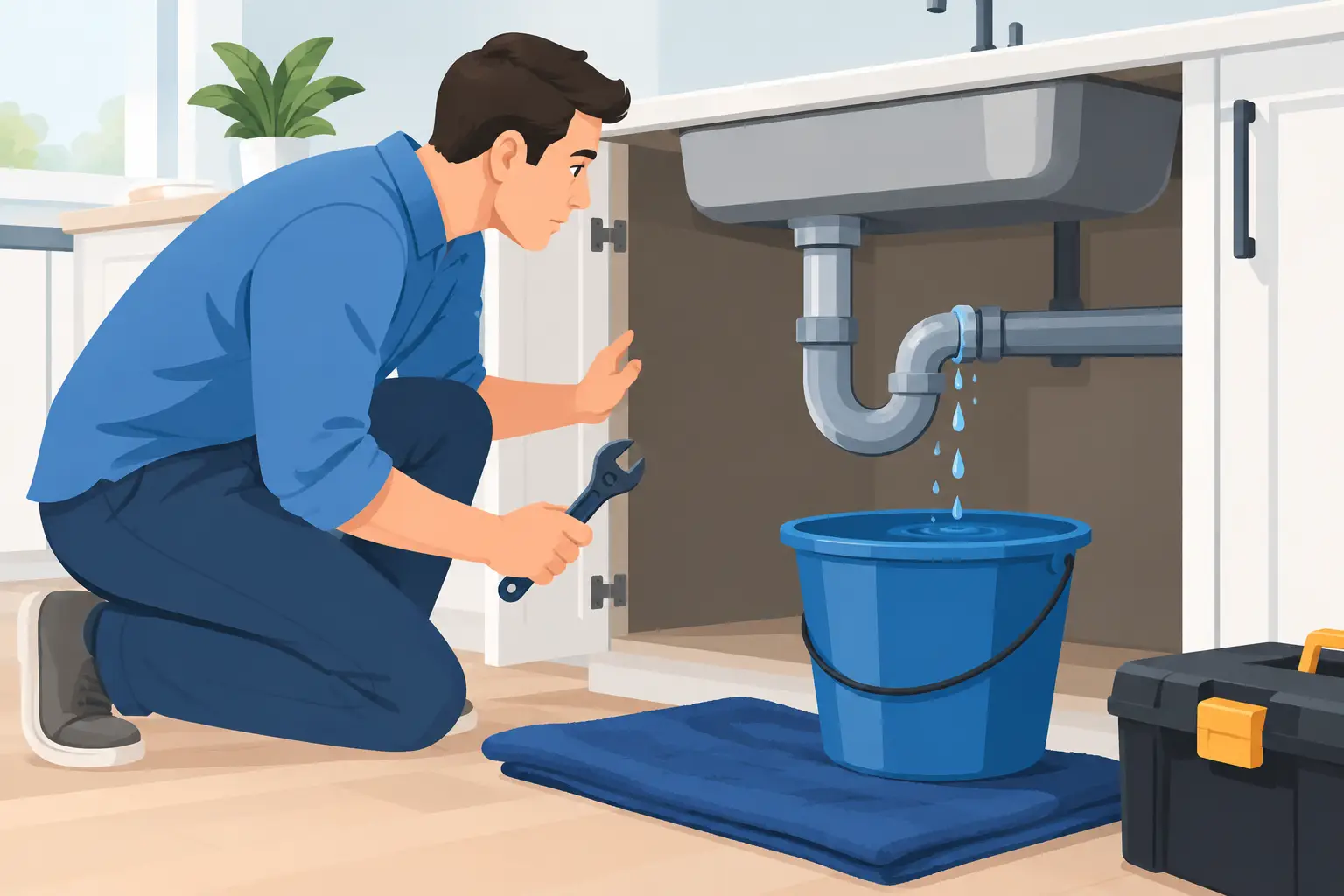
Place buckets, washing-up bowls or towels beneath a manageable leak. For water coming through a ceiling, use a container to catch the drip and move furniture, rugs and valuables away from the area. If water is pooling on the floor, use towels to prevent it travelling into adjoining rooms, under skirting boards or through floor coverings.
A ceiling that is visibly bulging may be holding a significant amount of water. Do not stand directly beneath it. Keep children and pets away, and do not attempt to cut, puncture or pull down the ceiling yourself. The source still needs isolating, and the ceiling may require a professional inspection once the leak is resolved.
Take clear photographs or a short video before cleaning up, if it is safe to do so. This can help a plumber understand the issue and may be useful for landlords, managing agents or insurance providers. Record where the leak appeared, when it started and whether it followed use of a tap, shower, washing machine, central heating or boiler.
Do not overlook your heating system
Not every leak comes from the mains water supply. A radiator valve, heating pipe or boiler connection can leak even after the main stopcock is closed. If the issue appears to be on the central heating system, turn the heating off at the controls and avoid repressurising the boiler until the fault has been assessed.
Check the boiler pressure gauge only if it can be done safely. A falling pressure reading, dampness around radiators or a boiler that repeatedly needs topping up can point to a heating-system leak. Continually adding water to maintain pressure is not a solution. It can accelerate corrosion and conceal a fault that needs repair.
If the leak is around a boiler, do not remove the casing or interfere with gas components. A Gas Safe engineer should inspect anything involving the boiler, gas pipework or its safety controls. If you smell gas, leave the property, avoid using electrical switches or naked flames, and follow the gas emergency procedure immediately.
Use a temporary measure only where it is safe
A small, accessible leak from a compression joint or a short section of exposed pipe may sometimes be contained temporarily with a pipe repair clamp, self-fusing tape or a purpose-made leak repair product. These can be useful to slow a drip after the water has been isolated, but they are not a lasting repair.
Do not use tape on damaged pipework that is under pressure and assume the problem is solved. A joint may be loose because of movement, corrosion, frost damage or excess pressure. Covering the visible drip can allow water to continue escaping behind cupboards, walls or floors.
Avoid using chemical sealants in your water or heating system unless a qualified engineer has advised it. The wrong product can affect valves, pumps, filters and boiler components, making the eventual repair more complicated.
Know when to call a plumber straight away
A professional plumber should be contacted promptly for any leak that cannot be isolated, is causing property damage or may involve concealed pipework. Fast action is particularly important if water is coming through a ceiling, leaking near electrics, affecting a boiler or radiator system, or coming from a burst pipe.
You should also arrange an inspection if the leak is slow but recurring. A cupboard that smells damp, peeling paint, a discoloured ceiling, unexplained mould or a higher-than-usual water bill can all indicate a hidden leak. Small leaks often cause the most costly damage because they remain unnoticed for weeks or months.
When you call, explain where the leak is, whether the water is now off, how quickly it is escaping and whether heating, hot water or electrics are affected. This helps the engineer arrive prepared with the likely parts and equipment.
For homeowners, landlords and property managers across Cheltenham, Gloucestershire, the Cotswolds, Bath and Stroud, Plumbing Bend Heating Service Ltd can provide fast, qualified support for urgent plumbing and heating faults as well as durable repairs once the immediate risk is under control.
Why pipes leak in the first place
The visible leak is often only part of the story. Pipework can fail because of frozen water expanding in winter, worn washers, corroded metal, loose joints, failed seals, high water pressure or movement in the building. In some cases, a previous repair has reached the end of its life or a poorly supported pipe has worked loose over time.
Leaks beneath baths, shower trays and kitchen units can be harder to diagnose because the water may emerge some distance from the actual fault. A leak that only appears when the shower is running, for example, may be linked to waste pipework, silicone sealing, a shower valve or a concealed supply pipe. That is why locating the source accurately matters before repairs begin.
A qualified plumber can test the pipework, inspect accessible connections and identify whether the issue is on the cold-water, hot-water, waste or heating system. Repairing the correct component first avoids unnecessary disruption and helps protect the rest of the installation.
Prevent the next leak where possible
After a repair, ask what caused the fault and whether other sections of pipework need attention. If a home has ageing plumbing, repeated corrosion or poor insulation, a planned upgrade can be better value than repeated emergency visits.
In cold weather, keep the heating on at a low background temperature when the property is occupied or empty for a short period. Insulate exposed pipes in lofts, garages and outbuildings, and know where the stopcock is before temperatures fall. For landlords and managers, regular inspections of vacant properties are especially worthwhile during a cold spell.
A leaking pipe is stressful, but it does not have to become a major disaster. Isolate the water, stay clear of electrical risks, protect the area and get the fault properly diagnosed. A quick, dependable repair now can prevent hidden damp, wasted water and more extensive work later.