

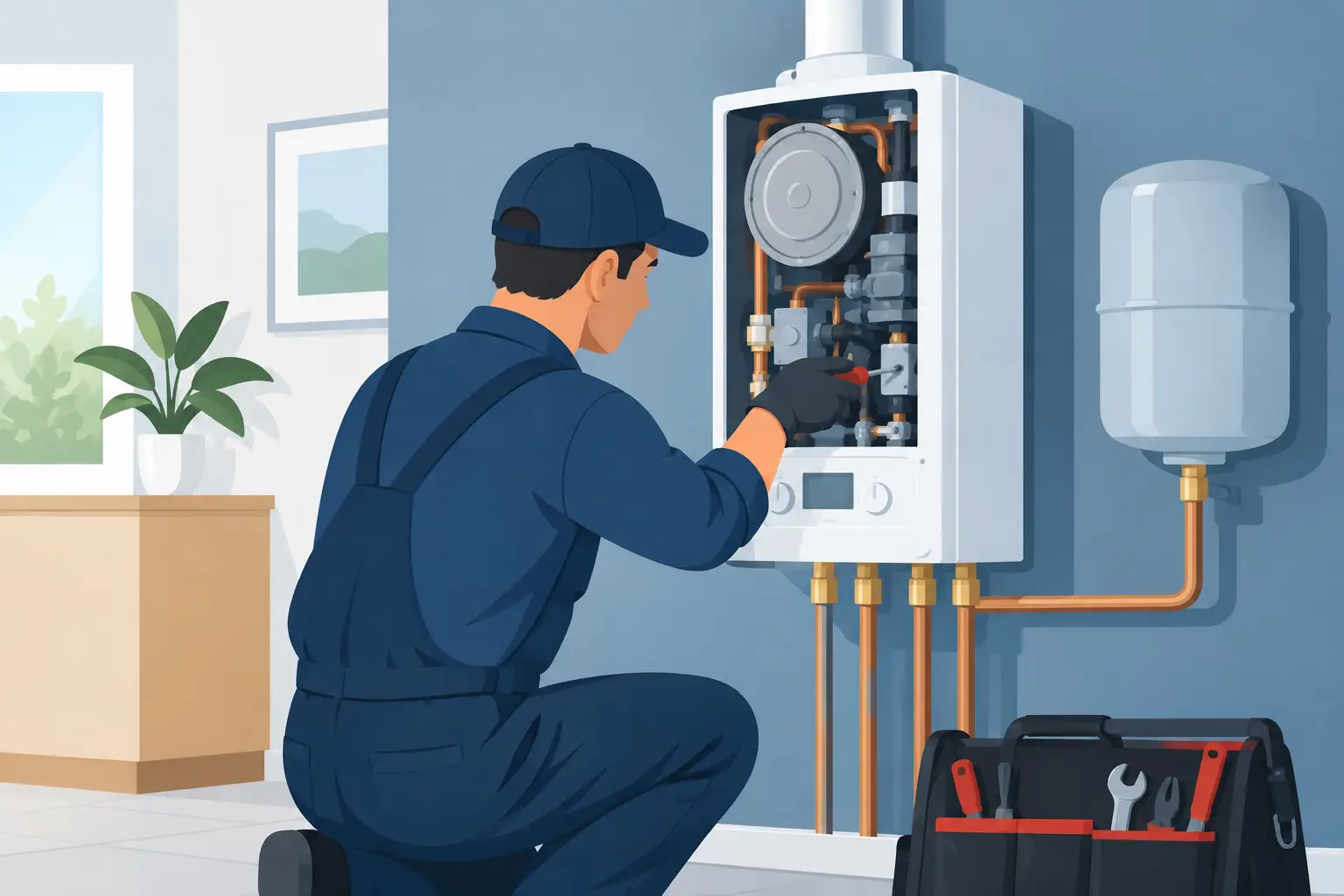
Boiler Servicing and What an Annual Visit Covers
A boiler rarely chooses a convenient time to fail. It is usually on the first cold morning of the year, before guests arrive, or when a tenant calls to say there is no hot water. Regular boiler servicing is the practical way to reduce that risk while making sure your heating system is operating safely and efficiently.
For homeowners, landlords and property managers, an annual service is not simply a box-ticking exercise. It gives a qualified Gas Safe engineer the chance to identify wear, incomplete combustion, poor pressure, leaking components and developing faults before they become a breakdown. In a Gloucestershire winter, that can mean the difference between a straightforward planned visit and an urgent loss of heating.
Why boiler servicing should be annual
Your boiler works hard behind the scenes, often for hours at a time during colder months. Heat, water, gas, pressure changes and moving parts all take their toll. Even a boiler that appears to be working normally can have an issue that is beginning to affect safety, reliability or running costs.
An annual service helps to keep the appliance within the manufacturer’s servicing requirements, which may be relevant to its warranty. More importantly, it checks that the boiler is burning gas correctly and that its safety devices are doing their job. Poor combustion can produce carbon monoxide, a colourless and odourless gas that is dangerous to people and pets.
Servicing can also protect efficiency. A boiler cannot always be returned to its original performance if it is old or poorly sized for the property, but keeping key components clean and correctly adjusted helps it operate as it should. Small concerns, such as an unstable flame reading or early signs of a pump problem, are usually easier and less disruptive to deal with than a full failure.
For most households, booking the service before the main heating season makes sense. Late summer and early autumn give you time to address any repair work before you rely on the system every day. That said, it is never too late to arrange a visit if it has been missed.
What happens during a boiler service?
A proper service is carried out by a Gas Safe registered engineer and is tailored to the appliance, its condition and the manufacturer’s instructions. The work is more than a visual check or a quick reset of the boiler.
The engineer will first discuss any issues you have noticed. This could include pressure dropping, radiators taking a long time to warm up, unusual noises, intermittent hot water or error codes. Sharing these details is useful because an occasional fault may not show itself while the engineer is present.
The boiler and its installation are then inspected. This includes checking the case and flue, the controls, ventilation where applicable, and visible pipework for signs of leaks or deterioration. The engineer will check that the boiler is operating safely, that the burner is combusting correctly and that the flue is removing combustion gases as intended.
Depending on the boiler model and service requirements, the visit may also involve cleaning relevant components, checking seals and electrodes, inspecting the condensate arrangement, testing safety devices, and confirming that gas pressures and emissions readings are within acceptable limits. Your engineer should explain any findings clearly and provide a service record when the work is complete.
A service does not automatically include the cost of replacement parts or repairs. If a fault is found, a dependable engineer will explain what has failed, what work is recommended and the likely cost before proceeding, unless you have agreed otherwise for an emergency repair.
Boiler service versus a repair
A service is preventative maintenance. A repair is work needed because something has already gone wrong. The two can overlap, but they are not the same appointment.
For example, a service may reveal that an expansion vessel needs attention or that a fan is becoming noisy. If the boiler has stopped firing, is displaying a fault code or is leaking, it needs diagnosis and repair. Waiting for the next annual service is not the right approach where there is an active fault, loss of heating or any concern about gas safety.
Boiler service versus a landlord gas safety check
Landlords have a separate legal responsibility to arrange an annual gas safety check for gas appliances and flues in their rental properties. This results in a Gas Safety Record and must be carried out by a Gas Safe registered engineer.
A boiler service and a landlord gas safety check can often be arranged together, but they have different purposes. The safety check confirms that appliances are safe at the time of inspection. Servicing focuses on the boiler’s condition, maintenance and performance. If you manage rental properties, it is sensible to confirm exactly what is included when booking.
Signs your boiler needs attention sooner
Do not wait for a planned service if your boiler gives you a reason to be concerned. A sudden loss of heating or hot water, repeated lockouts, water leaking from the boiler or pipework, a pressure gauge that repeatedly falls, or banging and whistling noises all warrant a professional inspection.
Other warning signs can be less obvious. Higher-than-expected energy use, radiators that stay cold at the bottom, a boiler that takes several attempts to start, or a yellow rather than crisp blue flame on a visible gas appliance should be taken seriously. Never remove a boiler case yourself or attempt to adjust gas components.
If you smell gas, suspect carbon monoxide, or a carbon monoxide alarm sounds, act immediately. Turn off the gas supply only if it is safe to do so, open doors and windows, leave the property, and contact the appropriate emergency gas service. Do not return until you have been told it is safe.
Getting more from your heating between services
A serviced boiler performs best when the wider heating system is looked after too. Keep the area around the boiler accessible, and do not use the cupboard for storing paint, coats or household items that could obstruct ventilation or access. Check your boiler pressure occasionally, following the manufacturer’s guidance, and only top it up if you understand the correct procedure.
It also helps to use your heating controls properly. A programmable thermostat lets you heat the property when it is needed rather than running the system unnecessarily. Turning a thermostat up to maximum will not make a cold home heat up faster – it simply tells the system to keep heating to a higher temperature.
If rooms heat unevenly, radiators need frequent bleeding, or the system water looks dirty when work is carried out, the issue may extend beyond the boiler. Sludge and debris can reduce circulation and place extra strain on pumps and components. In some properties, powerflushing, system cleaning, balancing or improved controls may be more useful than repeatedly repairing individual symptoms.
Older boilers present a different decision. A thorough service may keep an ageing appliance safe and functional, and replacement is not always urgent. However, if breakdowns are becoming regular, parts are difficult to source, or efficiency is poor, it may be more cost-effective to discuss replacement options rather than continue paying for short-term repairs.
Choose a qualified local engineer
Gas boiler work must be completed by a Gas Safe registered engineer qualified for the appliance involved. Ask who will attend, whether they are registered for domestic gas work, and what the service includes. Clear communication matters just as much as technical skill, particularly where an engineer finds a fault that needs further work.
Plumbing Bend Heating Service Ltd provides boiler servicing, repairs and heating maintenance across Cheltenham, Gloucestershire, the Cotswolds, Bath and Stroud. Our engineers explain the condition of your boiler in plain language, highlight any safety concerns and help you make a sensible decision about repairs or longer-term improvements.
Book your annual service before cold weather puts your heating under pressure. A planned visit gives you time, options and reassurance – and helps keep your home or property warm when it matters most.