

Is Powerflushing Central Heating Worth It?
A radiator that stays cold at the bottom while the top is hot is more than a minor annoyance. It can be a sign that sludge is restricting the flow of water through your heating system. If you are asking, is powerflushing central heating worth it, the answer depends on the condition of your system, the faults you are experiencing and whether a proper diagnosis confirms contamination is the cause.
Powerflushing can restore circulation, improve heat output and help protect expensive boiler components. But it is not a cure-all, and it should not be sold as one. A qualified heating engineer should assess the system first, explain what they have found and recommend the work only where it offers a clear benefit.
What powerflushing does to a central-heating system
Over time, the water inside a sealed central-heating system can react with metal components. This creates magnetite, a dark iron-oxide sludge, along with scale and other debris. It tends to settle in radiators, pipework and low-flow areas, gradually making it harder for hot water to circulate as intended.
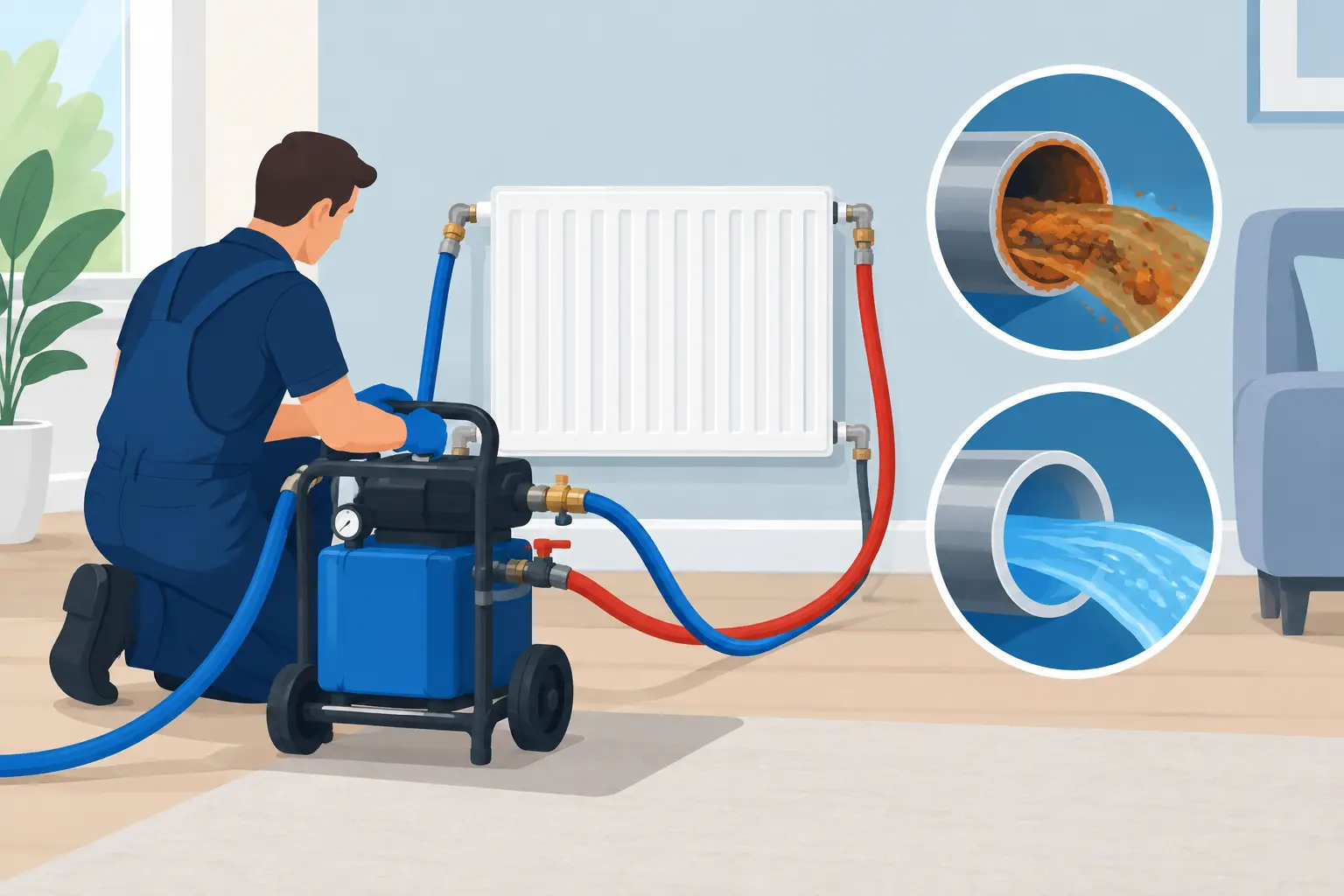
A powerflush uses specialist equipment to pump water and approved cleaning chemicals around the system at a controlled flow. Individual radiators may be worked on separately to dislodge deposits. The engineer then flushes out the dirty water, checks the system is running cleanly and adds an inhibitor to reduce future corrosion.
It is a thorough cleaning process, not simply draining and refilling the system. Draining alone can remove some dirty water, but it will not necessarily shift settled sludge from radiators and pipework.
Is powerflushing central heating worth it for your home?
It is often worthwhile when sludge is clearly affecting performance. A clean system allows water to move more freely, so radiators can heat more evenly and the boiler does not have to work as hard to push heat around the property. This can improve comfort and may reduce wasted energy, particularly where several radiators are struggling.
Powerflushing can also be a sensible investment before fitting a new boiler onto an older heating system. New boilers have efficient heat exchangers and narrow internal waterways that can be damaged or blocked by existing debris. Cleaning the system first helps give the new appliance a better start and supports its long-term reliability.
For landlords and property managers, it can help resolve persistent heating complaints across a property without immediately replacing every radiator or section of pipework. In homes with older systems, especially those with little maintenance history, a professional flush may prevent repeat call-outs caused by poor circulation.
However, the benefit is less clear if the system is already clean, heats evenly and has been maintained with inhibitor. In that situation, a powerflush may add cost without producing a noticeable improvement. The right approach is based on evidence, not a blanket recommendation.
Signs your heating system may need a powerflush
No single symptom proves that a powerflush is required, but a combination of issues is a good reason to arrange an inspection. Cold patches at the bottom of radiators are a common sign, as sludge sinks and collects there. You may also find that some rooms take far longer to warm up than others, even after radiators have been bled and the thermostat is working correctly.
Other warning signs include frequent boiler noise, known as kettling, dirty black water when a radiator is removed or drained, and repeated pump, valve or heat-exchanger faults. A magnetic filter that quickly collects a heavy amount of dark debris also points to ongoing corrosion within the system.
Poor heat output should not be assumed to be sludge straight away. A radiator may need balancing, the pressure may be low, a thermostatic radiator valve could be stuck, or there may be a boiler fault. An engineer should check these simpler causes before recommending more extensive work.
When a powerflush may not be the right answer
A heavily corroded system can contain weaknesses that have been hidden by deposits. Once cleaned, an old radiator, valve or pipe joint may reveal a leak that was already developing. This does not mean the flush caused the underlying defect, but it is an important risk to understand in older properties.
There are also cases where replacement is better value. If radiators are severely corroded internally, pipework is damaged, or the boiler has a significant fault, cleaning alone will not provide a lasting repair. Your engineer should be straightforward about whether a flush, targeted repairs or a wider upgrade makes the most financial sense.
What happens during a professional powerflush?
A proper powerflush begins with an assessment of the boiler, radiators, pressure and visible system condition. The engineer will identify likely circulation problems and check that the system is suitable for cleaning. They should also discuss any risks associated with very old components before work begins.
The flushing machine is then connected to the heating circuit. Cleaning solution is circulated while the engineer works through the system, often isolating and flushing radiators in turn. This process can take several hours and may take longer for a large property, a system with many radiators or one that is heavily contaminated.
Once the discharged water runs clear, the system is thoroughly rinsed. The engineer will refill it, add corrosion inhibitor, bleed radiators, restore the correct pressure and test heating performance. They may also recommend a magnetic filter if one is not already fitted, as it captures magnetic debris before it reaches sensitive boiler parts.
You should expect clear communication about the scope of work, what has been found and any follow-up repairs that may be needed. A flush is most effective when paired with good ongoing care rather than treated as a one-off fix forever.
The cost versus the potential saving
The cost of powerflushing varies with the number of radiators, access, system condition and whether related repairs are required. A larger rural property with multiple heating zones will take more time than a compact flat with six radiators. It is worth obtaining a clear quotation that explains what is included, rather than choosing solely on the lowest advertised price.
The value is not just about lower fuel bills. A system that heats evenly is more comfortable, easier to control and less likely to place avoidable strain on the boiler pump, valves and heat exchanger. Avoiding premature breakdowns or protecting a newly installed boiler can make professional cleaning a sensible preventative measure.
That said, do not expect a powerflush to transform an inefficient old boiler into a modern high-efficiency model. It improves the condition and circulation of the existing system. If your boiler is near the end of its life, a replacement plan may be the more practical conversation.
Keeping the system clean after flushing
The work does not end when the water runs clear. Corrosion inhibitor should be checked and topped up whenever the system is drained or altered. Annual boiler servicing gives an engineer the chance to spot pressure issues, poor circulation and early signs of component wear before they become a no-heating emergency.
If a magnetic filter is installed, it should be cleaned as part of regular maintenance. It is also sensible to investigate unexplained pressure loss promptly, as repeatedly topping up a sealed system introduces fresh oxygenated water that can accelerate corrosion.
For homeowners across Cheltenham, Gloucestershire and the Cotswolds, a professional inspection is the best starting point. Plumbing Bend Heating Service can assess whether sludge is genuinely holding your system back, explain the practical options and carry out the work with the care your heating system needs. If your radiators are cold, your boiler is noisy or your heating has become unreliable, arranging a check now can help restore dependable warmth before the problem becomes more expensive.