
When Boiler Repair Needs a Gas Safe Engineer
A boiler rarely fails at a convenient time. It is usually noticed on a cold morning, during a busy family evening, or when a tenant reports there is no hot water. Prompt boiler repair can restore comfort quickly, but it also protects your household, property and heating system from a minor fault becoming a more expensive problem.
For homeowners, landlords and property managers across Cheltenham, Gloucestershire, the Cotswolds, Bath and Stroud, the right response is not to guess at the cause or remove the boiler casing. Gas appliances need qualified attention. Knowing the warning signs, taking a few safe checks and calling a Gas Safe engineer at the right time can make the situation far less stressful.
Signs you may need boiler repair
Not every heating problem means the boiler itself has failed. A thermostat setting, low system pressure or a radiator issue can sometimes be the cause. Even so, a boiler that behaves differently from normal deserves attention, particularly if the fault returns after a reset.
Common signs include:
- No heating, no hot water, or an intermittent supply of either.
- A fault code, warning light or repeated need to reset the boiler.
- Unusual banging, whistling, gurgling or vibrating sounds.
- Pressure that regularly drops, rises too high or needs frequent topping up.
- Water leaking from the boiler, nearby pipework or the pressure relief pipe outside.
- Radiators that stay cold, heat unevenly or take much longer than usual to warm up.
- A yellow or lazy flame where a visible pilot flame should be blue.
- Soot marks, staining around the appliance, or a boiler that shuts down unexpectedly.
Some faults are inconvenient. Others may affect safety. If you smell gas, suspect carbon monoxide, see soot staining, or have a carbon monoxide alarm sounding, do not attempt to diagnose the appliance yourself. Turn off the gas supply only if it is safe to do so, open doors and windows, leave the property, and seek urgent professional and emergency advice.
Safe checks before you call
There are a few sensible checks that do not involve opening the boiler or touching gas components. First, look at the display for an error code and make a note of it. This helps the engineer understand the fault before arriving. Then check whether the electrical supply is on, whether the thermostat has fresh batteries if applicable, and whether its temperature is set high enough to call for heat.
You can also check the boiler pressure gauge. Most sealed central-heating systems operate at around 1 to 1.5 bar when cold, although the correct range depends on the manufacturer and system. If the pressure is clearly outside the marked operating range, consult your boiler manual. Repressurising may be a permitted homeowner task on some systems, but repeated pressure loss is not normal and needs investigation.
It is also worth checking whether other gas appliances are working and whether your energy supply is active. Do not keep resetting a boiler that repeatedly locks out. One reset may be appropriate if the manufacturer’s instructions allow it, but continual resetting can hide a developing fault and delay the repair it needs.
Why professional boiler repair matters
Modern boilers are efficient but complex appliances. Their controls monitor ignition, combustion, water temperature, pump operation, pressure and flue safety. A fault in one area can trigger a shutdown elsewhere, which is why a visible error code does not always identify the full cause.
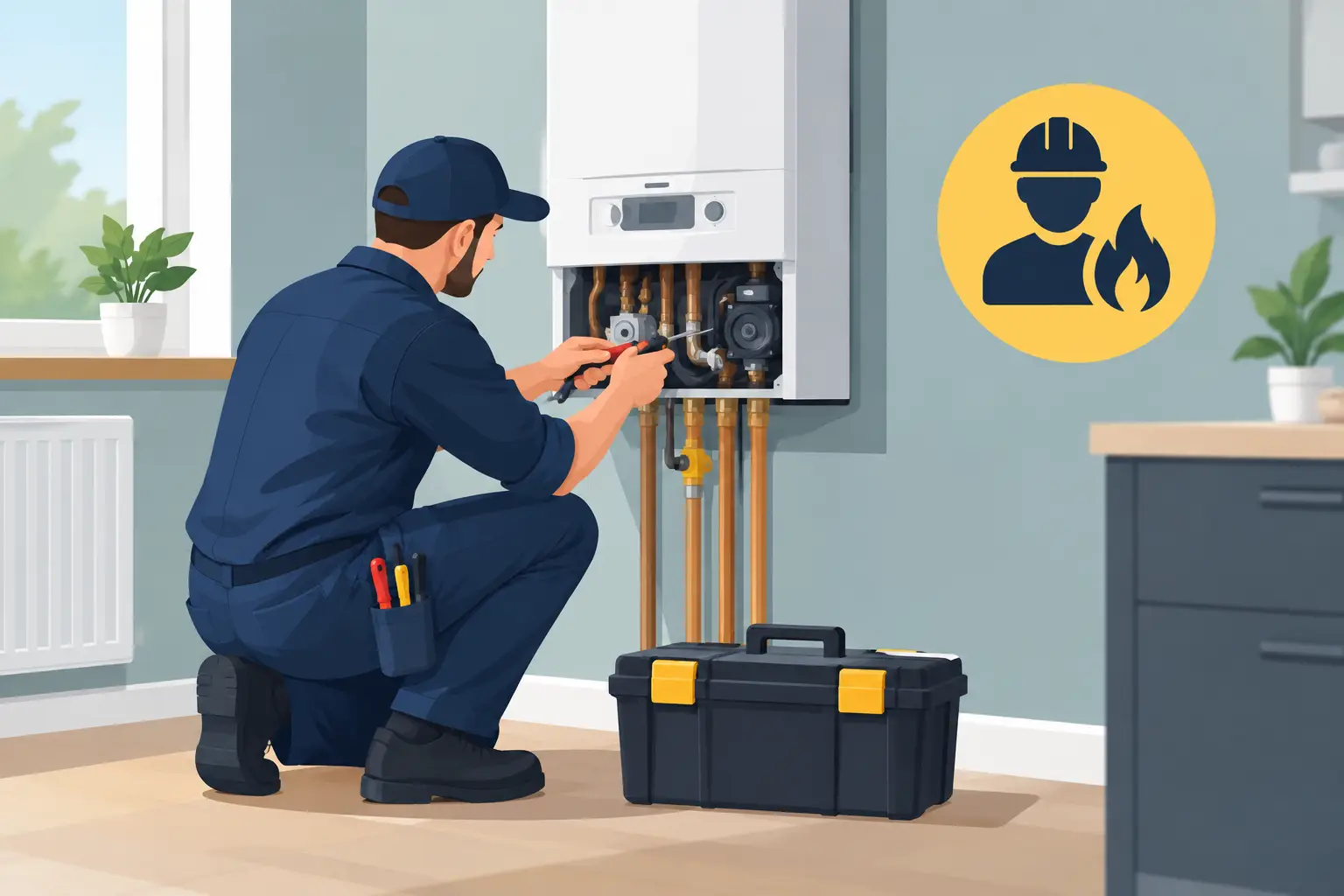
A Gas Safe engineer can test the appliance properly, inspect relevant components and confirm that the boiler is operating safely after the work is complete. Depending on the issue, this might involve repairing a leak, replacing a worn part, resolving ignition problems, correcting circulation issues, repairing controls or identifying a fault beyond the boiler itself.
The difference between a quick fix and a lasting repair often comes down to diagnosis. For example, low pressure may be caused by a small leak, a failed expansion vessel, a leaking radiator valve or a pressure relief issue. Simply restoring the pressure may bring the heating back temporarily, but it does not correct the underlying problem.
Professional work is particularly important where gas, combustion, flues or electrical components are concerned. Landlords also have legal duties around gas safety in rented homes, so a reported boiler fault should be handled promptly and recorded appropriately.
What happens during a boiler repair visit?
A good repair visit starts with clear questions: when the fault began, whether it is constant or intermittent, what error code is showing, and whether there have been leaks, noise or recent changes to the heating system. Providing this information can save time and help the engineer arrive prepared.
The engineer will then assess the boiler and related system components safely. This may include checking pressure, controls, pump performance, condensate drainage, combustion readings and the flue route where relevant. They should explain the fault in plain language and set out the work required before proceeding wherever possible.
Sometimes the repair is straightforward and can be completed during the first visit. In other cases, particularly with older appliances or less common parts, a replacement component may need to be sourced. A reliable contractor should be honest about timescales, costs and whether repair remains the sensible option.
At Plumbing Bend Heating Service Ltd, the focus is on clear advice, qualified workmanship and getting your heating back to dependable operation without unnecessary disruption.
Repair or replacement: how to make the right call
Boiler replacement is not automatically the answer whenever a fault occurs. A well-maintained boiler with a single failed component may have many useful years left. Repair is often the practical and cost-effective choice when the appliance is reasonably efficient, parts are available and the rest of the system is in good condition.
Replacement becomes worth considering when repairs are frequent, the boiler is old, spare parts are difficult to obtain, or the appliance is no longer delivering reliable heating and hot water. It may also make sense if your household’s needs have changed. A larger family, an extension, an additional bathroom or poor hot-water performance can indicate that the existing boiler is no longer correctly sized.
The wider heating system matters too. Installing a new boiler onto a system with dirty water, poor circulation or failing controls can limit its performance. In some cases, system cleaning, radiator improvements, controls upgrades or powerflushing should be discussed alongside replacement. The right recommendation depends on the condition of the property, the age of the system and your budget, not just the boiler’s age.
Preventing avoidable boiler faults
Annual boiler servicing is one of the best ways to reduce unexpected breakdowns. It gives a qualified engineer the opportunity to inspect key safety and performance elements before winter demand exposes a problem. Servicing also helps maintain efficiency, which can support lower energy use over time.
Between services, keep an eye on boiler pressure, listen for new noises and respond to small leaks early. Avoid covering the boiler or blocking ventilation where the appliance requires it. If you have a condensate pipe outside, make sure you know where it runs, as freezing weather can sometimes cause a blockage and boiler shutdown.
Heating system care also extends beyond the boiler. Bleeding radiators when needed, addressing cold spots and having dirty system water assessed can help protect pumps, valves and heat exchangers. If your home has older pipework or radiators, preventative work may be more valuable than waiting for a winter breakdown.
Act early for safer, more reliable heating
A boiler fault does not always mean an emergency, but it should not be ignored. Keep your household safe, avoid repeated resets and arrange professional help when heating or hot water becomes unreliable. Early boiler repair can often prevent a smaller issue from turning into a cold home, water damage or a more disruptive system failure.