

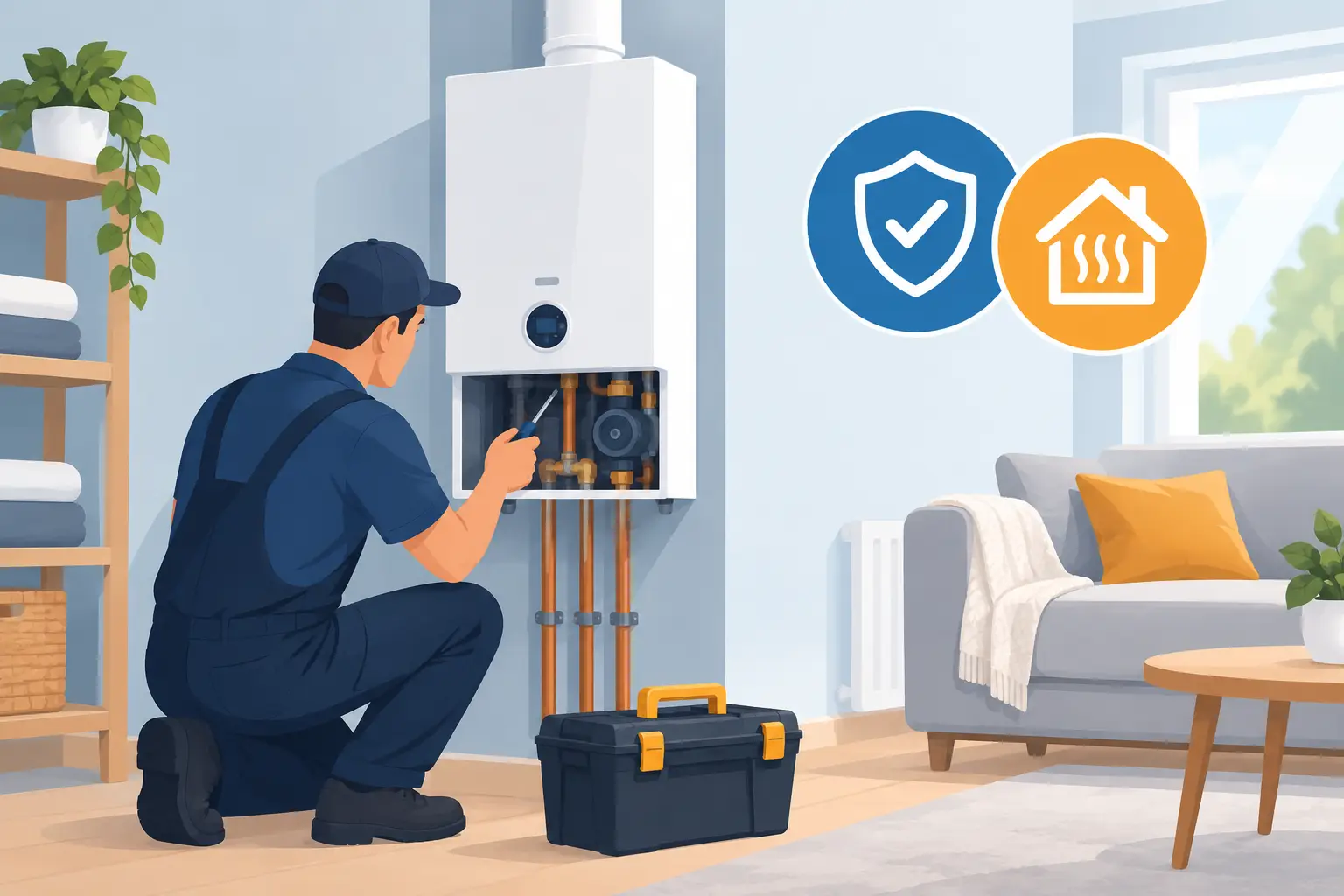
Gas Boiler Maintenance for Safer, Warmer Homes
A boiler rarely chooses a convenient moment to fail. It is usually on the first properly cold morning, when hot water demand is highest, or just before guests arrive. Regular gas boiler maintenance is the practical way to reduce that risk, protect your household and keep heating costs under control.
For homeowners, landlords and property managers across Gloucestershire, a yearly boiler service is not simply a box to tick. It gives a Gas Safe engineer the opportunity to spot worn parts, poor combustion, pressure problems and early leaks before they become a no-heating emergency or a costly repair.
Why gas boiler maintenance matters
A modern gas boiler works hard in the background. It burns fuel, moves water around your heating system and safely removes combustion gases from the property. When each part is clean, correctly adjusted and operating as designed, you get reliable hot water, consistent heating and better efficiency.
Over time, however, small issues can develop. A blocked condensate pipe, a deteriorating seal, low system pressure or debris circulating through radiators may affect performance. Left alone, these faults can lead to cold spots, strange noises, repeated pressure loss or a boiler lockout.
Maintenance is also about safety. Any appliance burning gas must be checked by a properly qualified Gas Safe engineer. They can assess the boiler, flue and ventilation arrangements, test combustion where appropriate, and make sure safety devices are operating correctly. Never remove the boiler casing or attempt to repair gas components yourself.
For landlords, an annual gas safety check is a legal requirement for relevant gas appliances in rented homes. A boiler service and a gas safety check can often be arranged together, but they are not identical. The safety check confirms required safety points; a full service also focuses on the boiler’s condition, performance and maintenance needs.
What a professional boiler service should cover
The exact work depends on the boiler model, its age and the manufacturer’s instructions. A straightforward annual service is often enough for a well-maintained modern boiler, while an older appliance or a system with recurring faults may need further investigation.
A competent service normally includes a visual inspection, safe operation checks and a review of the boiler’s key components. Your engineer may:
- inspect the boiler, controls, flue route and visible pipework for damage, leaks or unsuitable installation conditions;
- check operating pressure, heating performance and hot water delivery where applicable;
- inspect and clean internal components in line with manufacturer guidance, including the burner, heat exchanger area, fan and condensate trap where required;
- test combustion and flue-gas readings to confirm the appliance is burning fuel safely and efficiently;
- check safety devices, seals and electrical connections, then explain any repairs or further work recommended.
A good engineer will give you clear findings rather than vague warnings. If a part is nearing the end of its life, you should understand what it does, what could happen if it fails and whether repair is sensible now or can be planned. Transparent advice matters, particularly with older boilers where the cost of repeated repairs can begin to outweigh the value of keeping the appliance.
Between services: simple checks homeowners can make
You do not need to be technical to notice early signs of trouble. A quick check every few weeks during the heating season can help you arrange a repair before the boiler stops altogether.
Look at the pressure gauge when the system is cold. Many sealed systems operate around 1 to 1.5 bar, but always follow the guidance for your specific boiler. A gradual drop may indicate a small leak or a problem with the expansion vessel. Constantly topping up the pressure is not a fix – it can introduce fresh water and oxygen into the system, increasing the risk of internal corrosion.
Pay attention to the radiators too. If some rooms warm up slowly, radiators are cold at the top, or you hear banging and gurgling, the heating system may contain air or sludge. Bleeding a radiator can be suitable for a confident homeowner, but repeated air in the system needs investigation. Dark water, cold areas at the bottom of radiators and poor circulation can point to sludge, which may require chemical cleaning or powerflushing.
Keep the area around the boiler clear and accessible. Do not block air vents, cover the appliance or use the boiler cupboard as a tightly packed storage space. Check that the condensate pipe outside is protected from frost in cold weather. If it freezes, the boiler may shut down, although any work beyond safe, basic thawing advice should be left to an engineer.
Finally, test your carbon monoxide alarms regularly and replace batteries or units as required. An alarm is an essential warning device, but it does not replace professional gas appliance maintenance.
Warning signs that need a Gas Safe engineer
Some boiler issues should not wait for the next service. Arrange professional help if you notice a yellow or orange flame instead of a crisp blue flame on a visible gas appliance, black staining around the boiler, persistent water leaks, repeated loss of pressure, or error codes that return after a reset.
Noises matter as well. A light hum is normal, but whistling, kettling, banging or loud vibrating can indicate poor circulation, limescale, air, a failing pump or another mechanical issue. The cause depends on the system, so diagnosis is more useful than guessing at a replacement part.
If you smell gas, suspect carbon monoxide, feel unwell with symptoms such as headaches or dizziness, or a carbon monoxide alarm sounds, treat it as an emergency. Turn off the appliance only if it is safe to do so, open windows and doors, leave the property, and contact the appropriate emergency gas service. Do not switch electrical items on or off, smoke, or return indoors until you have been told it is safe.
When should you book boiler maintenance?
Late summer or early autumn is often the best time to arrange a service. Engineers can assess the boiler before it is needed every day, and any recommended repair can be completed without the pressure of a cold house. It also avoids the busiest part of the heating season, when urgent breakdowns naturally take priority.
That said, the best time is ultimately before your manufacturer’s annual service interval expires. Some warranties require evidence of regular servicing, so keep your service records in a safe place. If you have just moved into a property and do not know when the boiler was last checked, booking an inspection is a sensible starting point.
For a holiday home, rental property or small commercial premises, consider how periods of low use affect the system. Frost protection, thermostat settings and occasional checks are particularly valuable in vacant properties. A boiler can be in working order when a building is occupied, yet develop a leak or frozen-pipe problem when left unattended in winter.
Maintenance is about the whole heating system
The boiler is only one part of your heating. Thermostats, motorised valves, pumps, radiators, magnetic filters and pipework all influence comfort and efficiency. If the boiler fires but rooms remain cold, replacing the boiler may not be the answer. The fault may be in the controls, system balance or water quality.
This is why a wider system check can be worthwhile when you have uneven heating, frequent boiler faults or high gas bills. Cleaning a neglected system, fitting or servicing a magnetic filter, balancing radiators and improving controls can extend the life of a boiler that is otherwise in good condition. On the other hand, if an older boiler needs major repairs and is inefficient, a planned replacement may offer better long-term value.
Plumbing Bend Heating Service Ltd provides Gas Safe boiler servicing, repairs and heating maintenance for homes and properties throughout Cheltenham, Gloucestershire, the Cotswolds, Bath and Stroud. Whether the job is routine servicing or a fault that cannot wait, the aim is the same: clear advice, safe workmanship and dependable heat when you need it.
Book maintenance before winter puts your boiler under its greatest strain. A short visit now can prevent a much longer spell without heating later.