

Air Conditioning Maintenance for Home Made Simple
A home air-conditioning system often gets ignored for months, then is expected to work perfectly on the first hot afternoon. Air conditioning maintenance for home helps avoid that uncomfortable surprise. A few regular checks, combined with professional servicing, can keep cooling effective, control running costs and protect the system from preventable faults.
For homeowners across Cheltenham, Gloucestershire, the Cotswolds, Bath and Stroud, maintenance is particularly worthwhile before the warmer season begins. It is easier to arrange a planned visit than to deal with a system that has stopped cooling when your home is already too warm.
Why regular maintenance makes a difference
Air conditioning does more than lower the temperature. Depending on the system, it can remove excess moisture from indoor air, circulate filtered air and, with many modern units, provide efficient heating during cooler months. Each of these jobs relies on clean components, unrestricted airflow and correctly operating controls.
When filters become blocked, the indoor unit has to work harder to move air. You may notice weaker airflow, less consistent temperatures or higher electricity use. Dirt on coils can also reduce the unit’s ability to transfer heat, while a blocked condensate drain can lead to water dripping from the indoor unit.
Routine attention does not guarantee that a part will never fail. It does, however, give an engineer the opportunity to spot wear, drainage issues and performance problems before they become a larger repair. This can extend the working life of the equipment and help it operate closer to its intended efficiency.
Air conditioning maintenance for home: safe owner checks
There are several straightforward jobs a homeowner can carry out between professional service visits. Always turn the unit off at the isolator or controls before removing filters or cleaning accessible areas. If you are unsure how your particular unit opens, refer to the manufacturer instructions rather than forcing a panel.
Clean or replace the filters
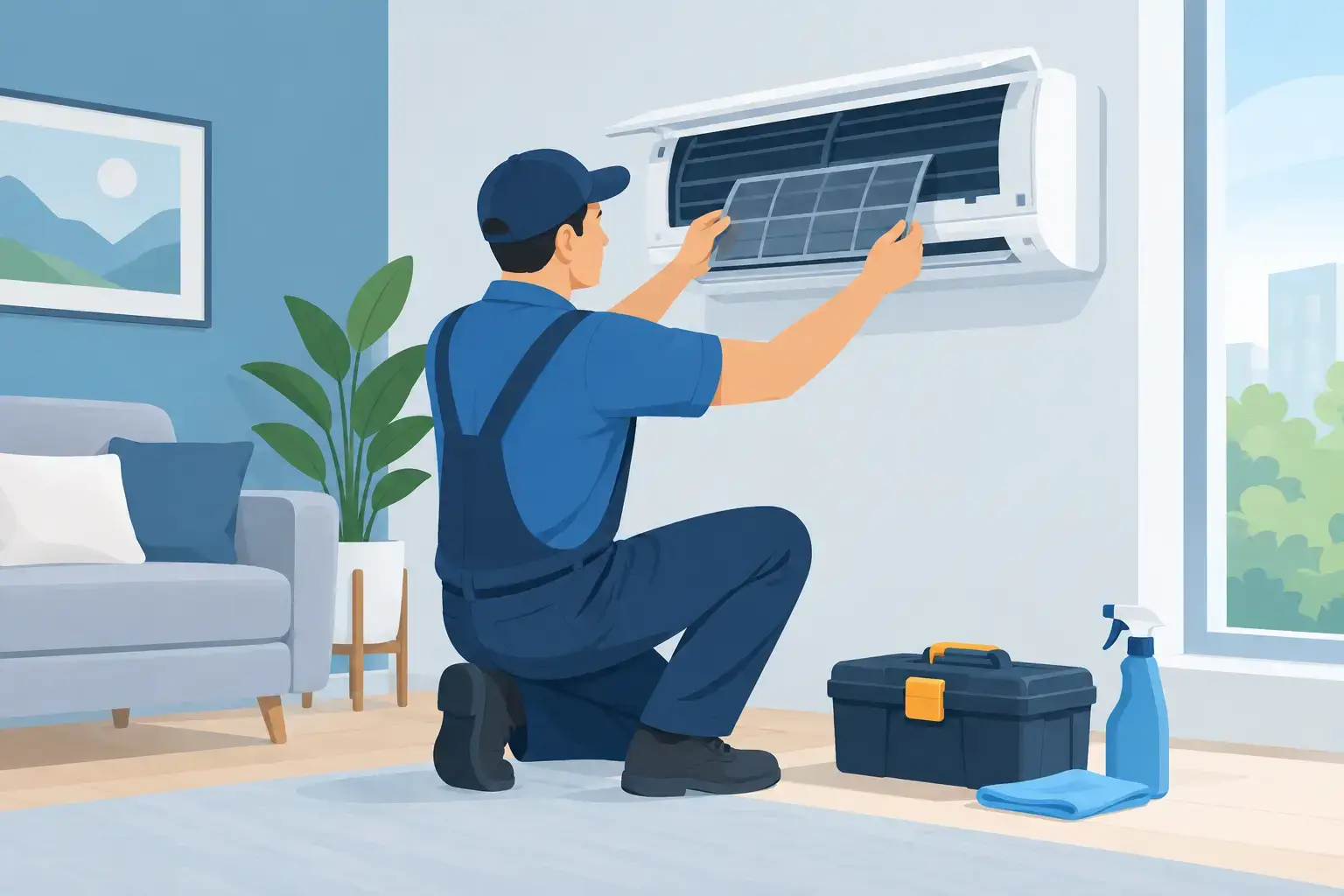
Most wall-mounted indoor units have washable mesh filters behind the front cover. Check them every month when the system is being used regularly, especially in homes with pets, open windows or high levels of dust. A light vacuum may be enough, or the filters can usually be rinsed with lukewarm water and left to dry fully before refitting.
Do not run the system without filters unless the manufacturer specifically allows it. Filters protect the indoor coil as well as improving air quality, and a dirty coil is more difficult to clean properly.
Keep the outdoor unit clear
The outdoor condenser needs space to draw in and expel air. Leaves, grass cuttings, plant growth and stored garden items can restrict it. Keep the area around the unit clear and make sure it is not being covered by a temporary screen, bin bags or furniture.
A gentle wipe of the casing is fine, but avoid pressure washing the coil fins. They bend easily and can be damaged by high-pressure water. If the coil is visibly dirty or blocked, arrange a professional clean.
Pay attention to changes in performance
A system that takes longer to cool, makes a new rattling sound, produces an unpleasant smell or drips water indoors is asking for attention. Note when the issue occurs and whether it affects one room or every indoor unit. This information helps an engineer diagnose the fault more quickly.
It is also worth checking the remote control settings before booking a repair. A unit accidentally set to heating, fan-only mode or an unusually high temperature will not provide the cooling you expect.
What a professional air-conditioning service should cover
A proper service goes further than cleaning a filter. The exact work depends on the age, type and condition of the installation, but an experienced engineer will assess both indoor and outdoor components and test the system in operation.
The visit should include checking airflow, temperature performance, electrical connections, controls and visible pipework. The engineer can clean accessible coils and fans where required, inspect and clear the condensate drainage route, and look for signs of damage or corrosion. They may also check mounting brackets, vibration, insulation and the general condition of the outdoor unit.
Work involving refrigerant must not be treated as a DIY job. Refrigerant circuits are sealed systems, and a loss of gas can indicate a leak that needs to be located and repaired, not simply topped up. Any work on the refrigerant circuit should be carried out by an appropriately qualified F-Gas certified air-conditioning engineer.
Professional maintenance is also the right time to discuss whether the system is correctly sized for the room. An undersized unit may struggle continuously in peak heat, while an oversized system can cool too quickly without managing humidity as effectively. Curtains, loft insulation, large south-facing windows and room use all affect real-world performance.
How often should home air conditioning be serviced?
For most domestic systems, an annual service is a sensible baseline. Book it before the main cooling season where possible, so the unit is clean and checked before demand increases. If your system is used for heating as well as cooling, or runs frequently in a home office, conservatory, rental property or small commercial space, a six-monthly check may be more appropriate.
The manufacturer’s warranty may set its own servicing requirements, so keep the installation paperwork and service records. Regular records are useful if a fault develops, and they demonstrate that the system has been cared for properly.
A newer unit in a lightly used guest room may need little attention between annual services. By contrast, a unit near a busy road, kitchen extraction outlet or mature garden may collect dust and debris much faster. Maintenance schedules should reflect the environment, not just the calendar.
Problems that should not wait
Some faults are best dealt with promptly. Water leaking from an indoor unit can damage plaster, flooring and furnishings. Repeated tripping of the electrical supply, a burning smell, loud mechanical noise or ice forming on pipework are all reasons to switch the system off and arrange an inspection.
Poor cooling can have several causes, from a dirty filter or incorrect setting to a fan issue, blocked coil or refrigerant fault. Running the system harder is unlikely to solve the problem and can place further strain on components. Early diagnosis is usually the more cost-effective option.
Unusual smells deserve attention too. A musty smell may point to moisture or contamination around the indoor coil and drain tray, while an electrical smell needs urgent assessment. Avoid masking odours with air fresheners, as this can delay finding the underlying issue.
Maintenance for landlords and managed properties
For landlords and property managers, air-conditioning maintenance protects more than equipment. It helps provide a comfortable, usable property for tenants and reduces the risk of disruptive call-outs during hot weather. Arrange servicing between tenancies where possible, when engineers have clear access to indoor and outdoor units.
Keep a simple record of service dates, reported concerns and repairs. Encourage occupiers to clean filters if this is part of their responsibility, but make it clear that leaks, electrical issues and loss of cooling should be reported rather than investigated by tenants.
Get ahead of the next warm spell
The best time to maintain an air-conditioning system is while it is still working. Clean the filters, clear the outdoor unit and book a qualified service before a minor issue turns into a loss of comfort. For dependable air-conditioning maintenance, repair or advice on a home system, Plumbing Bend Heating Service Ltd can help keep your equipment ready for the season ahead.