

Combi Boiler Versus System Boiler Compared
A boiler replacement often becomes urgent at the worst possible time: the heating is unreliable, the hot water is running cold, or a repair is no longer cost-effective. When comparing a combi boiler versus system boiler, the right answer depends less on which type is “best” and more on how your property uses hot water, how many bathrooms it has, and the space available for equipment.
For a compact Cheltenham terrace, a combi may be the sensible, space-saving choice. For a busy family house in the Cotswolds with two showers running before school, a system boiler and cylinder can offer a far more comfortable result. Choosing correctly at the start helps avoid disappointing water pressure, unnecessary alterations and higher future costs.
Combi boiler versus system boiler: the practical difference
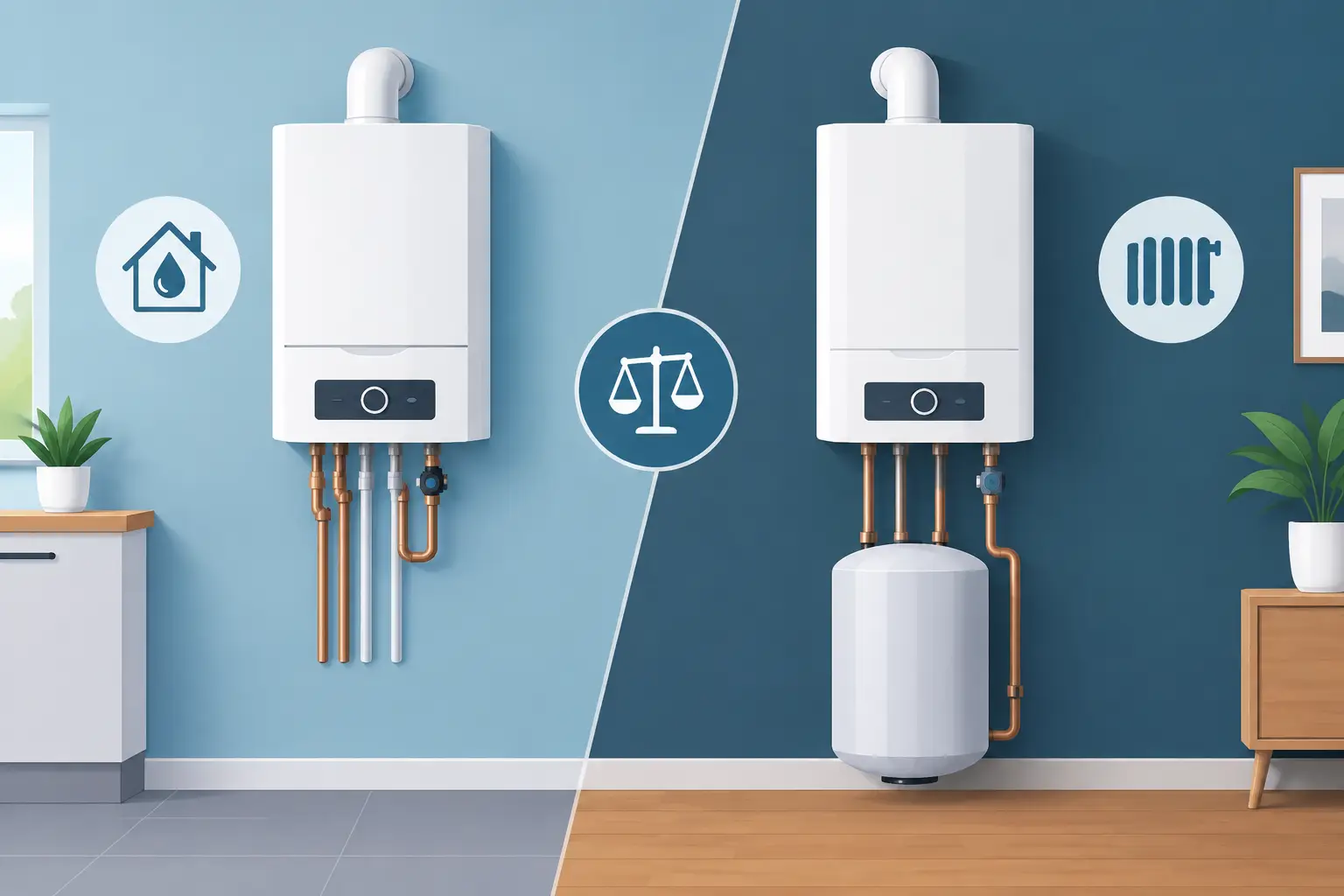
A combi boiler provides central heating and domestic hot water from one wall-mounted unit. It heats water directly from the mains whenever you open a hot tap or start a shower. There is no separate hot-water cylinder, and usually no cold-water storage tank in the loft. This is why combi boilers are common in flats, smaller homes and properties where cupboard space is limited.
A system boiler provides heating in a similar way, but stores domestic hot water in a separate cylinder. The cylinder holds a reserve of hot water ready for use. Most of the major components are built into the boiler itself, which can make installation neater than older conventional boiler arrangements, but you still need room for the cylinder.
The key distinction is therefore hot-water delivery. A combi heats water on demand. A system boiler heats and stores it in advance.
When a combi boiler is the better fit
A combi boiler can be an excellent option for one-bathroom homes, smaller households and properties with a dependable mains-water supply. It removes the need for a hot-water cylinder, freeing up an airing cupboard for storage or allowing more flexibility during a renovation.
Because water is only heated when required, a combi avoids the standing heat loss associated with storing hot water in a cylinder. Modern, correctly sized combis are efficient and straightforward to use, particularly where hot-water demand is modest and tends not to overlap.
For example, if one person is showering while another occasionally washes up, a suitably sized combi will often cope well. It can also be a practical replacement where an old boiler and cylinder have reached the end of their working life and the homeowner wants a simpler system.
There are trade-offs. A combi has a set flow rate, meaning its hot-water performance is limited by the boiler’s output and the incoming mains pressure and flow. Running a shower while someone fills a bath or uses another hot tap may reduce flow or affect temperature. A powerful shower does not automatically solve this problem; the whole system needs to be assessed.
Combis are also not ideal where several bathrooms are routinely used at the same time. Installing a larger combi can improve hot-water flow to a point, but it cannot create more mains-water supply than the property receives.
Why a system boiler suits higher demand
A system boiler is usually the stronger choice for larger homes, properties with two or more bathrooms, and households where people regularly need hot water at the same time. A correctly sized cylinder can supply more than one outlet without the same drop in performance that a combi may experience under competing demand.
This makes a real difference in family homes. One person can shower while another runs a bath, provided the cylinder capacity, plumbing layout and incoming water supply are suitable. The stored volume gives the system useful resilience during busy morning and evening periods.
A system boiler can also work well in homes with an existing hot-water cylinder that is in good condition, or where a cylinder can be accommodated in an airing cupboard, utility room or dedicated plant space. Modern unvented cylinders are supplied directly from the mains and can deliver strong pressure, but they must be installed and serviced correctly. The necessary safety controls are not optional, and work on these systems should be completed by a properly qualified engineer.
The compromise is space and planning. You need somewhere for the cylinder, and stored hot water can eventually be used up. Once the cylinder is depleted, it needs time to reheat, although suitable controls and boiler sizing can reduce the inconvenience. A well-insulated modern cylinder retains heat effectively, but it will still have some standing heat loss compared with on-demand heating.
Do not choose on boiler type alone
The boiler is only one part of the result. Before recommending either option, an engineer should consider your water pressure, flow rate, existing pipework, radiator output, insulation levels and typical household routine. A high-specification boiler will not compensate for undersized pipes, a weak incoming main or a poorly balanced heating system.
The number of bedrooms is not a reliable shortcut. A four-bedroom house occupied by two people may have modest hot-water demand, while a two-bedroom property with two en-suite showers may need a system designed for simultaneous use. Think about what actually happens in your home on a normal weekday, not only what is theoretically possible.
It is also worth looking at future plans. If you are adding an en-suite, converting a loft or increasing occupancy, fitting a combi purely because it costs less initially could create limitations later. Equally, installing a large cylinder in a small home with low demand may use valuable space without offering a meaningful benefit.
Installation costs and ongoing value
The cheapest boiler quote is not always the lowest-cost solution over the life of the system. Replacing an existing combi with a new combi is often less disruptive than converting to a system boiler because no cylinder or associated pipework needs to be added. Replacing an existing system boiler can also be efficient where the cylinder and distribution system remain suitable.
Changing from a conventional setup to a combi may involve removing tanks, altering pipework and making good the space left behind. Moving from a combi to a system boiler can require a new cylinder, safety controls, upgraded pipework and a suitable location. The amount of work varies significantly from property to property.
A proper quotation should make clear what is included: boiler output, cylinder size where relevant, controls, filter, condensate arrangement, flue work, chemical clean or powerflush if needed, commissioning and warranty registration. It should also explain any recommended repairs or upgrades rather than leaving essential work as an unexpected extra.
Long-term value comes from correct design, competent installation and regular servicing. Both combi and system boilers can offer efficient, dependable heating when they are correctly sized and maintained. Neither is a fit-and-forget appliance.
Hot-water comfort, controls and maintenance
A combi gives you effectively continuous hot water for one main demand at a time, as long as the mains supply is adequate. A system boiler gives you a stored quantity that can support higher simultaneous demand. This is the most useful way to compare them, rather than assuming one is inherently superior.
Controls matter too. A programmable thermostat, thermostatic radiator valves and sensible heating schedules help either system run efficiently. For system boilers, cylinder temperature and heating times should be set correctly to maintain comfort and hygiene without heating water unnecessarily. For combis, correct temperature settings can improve efficiency and make showers more consistent.
Annual servicing is particularly important for gas boilers. It checks safe operation, combustion performance, seals, ventilation requirements and key components before a minor issue becomes a breakdown. Keeping system water clean, maintaining the correct pressure and addressing leaks promptly will also support the life of radiators, pumps and the boiler heat exchanger.
Which boiler should you choose?
Choose a combi when you have limited space, one main bathroom, modest simultaneous demand and a strong enough mains-water supply. Choose a system boiler when multiple bathrooms are used at once, your household needs higher hot-water volume, or you have room for a cylinder and want the added flexibility it brings.
If the decision is close, arrange a site assessment rather than relying on online boiler selectors. A local Gas Safe engineer can measure flow and pressure, inspect the existing installation and recommend a boiler and cylinder arrangement that suits the property rather than a generic template.
At Plumbing Bend Heating Service Ltd, we help homeowners and property managers across Gloucestershire make practical heating decisions with clear advice and quality installation. The best time to assess your options is before the old boiler fails completely, when there is time to choose a system that will keep your home comfortable for years to come.