
Electric Boiler vs Gas Boiler: Which Is Best?
A boiler replacement is not a decision most property owners make lightly. The choice between an electric boiler vs gas boiler affects day-to-day comfort, hot-water performance, installation costs and energy bills for years to come. For many homes across Gloucestershire, the answer will still be a modern gas boiler. But an electric boiler can be a sensible solution where there is no gas supply, where space is tight or where a property has a smaller heating demand.
The right option depends on the building, not just the boiler. Your insulation, number of bathrooms, existing pipework, radiator size, energy tariff and future plans all matter. Here is a clear comparison to help you make a practical choice.
Electric boiler vs gas boiler: the key difference
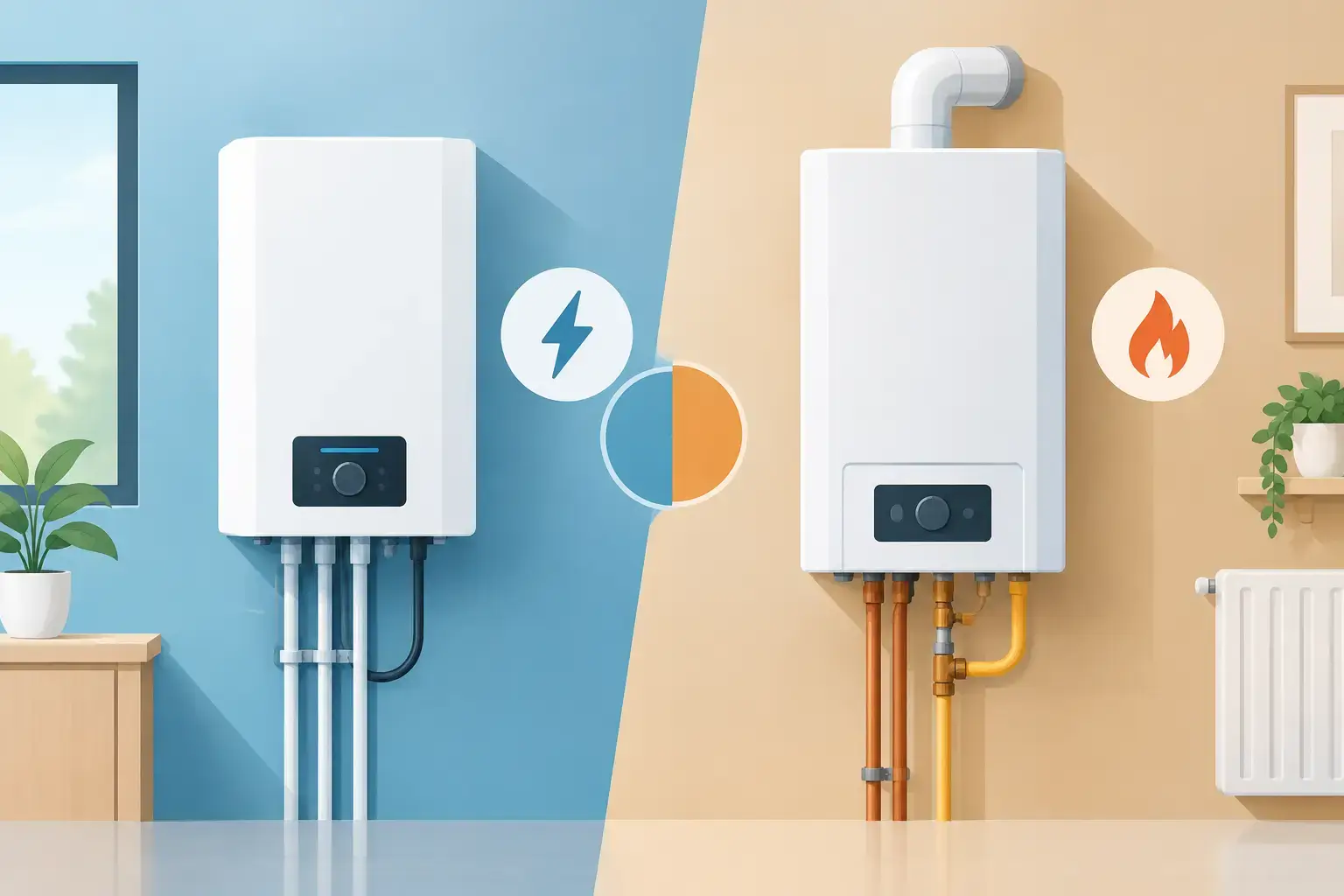
Both boiler types heat water for radiators, underfloor heating and, in some cases, domestic hot water. A gas boiler burns mains gas, while an electric boiler uses electricity to heat an internal element.
Electric boilers are generally compact, quiet and straightforward mechanically. They do not need a gas connection or a flue, because there are no combustion gases to remove. Gas boilers need a correctly installed flue and annual servicing by a Gas Safe registered engineer, but they can deliver a much higher heat output for most family homes.
The central question is simple: can the boiler provide enough heat and hot water at a cost that suits your property?
Running costs: gas is usually cheaper to run
Electric boilers are highly efficient at the point of use. Nearly all the electricity they consume is converted into heat. However, electricity normally costs significantly more per unit than mains gas in the UK. That means an electric boiler can cost more to run, even though its efficiency figure looks excellent.
A modern condensing gas boiler is also very efficient when it is correctly sized, installed and controlled. It can be especially economical in a typical three or four-bedroom home with several radiators and regular hot-water demand.
Electric heating may be more manageable in a well-insulated small flat, a holiday property used occasionally, or a home with solar PV and suitable battery storage. Even then, solar generation is limited during the colder, darker months when heating demand is highest. It should be considered as part of the calculation, not treated as free winter heating.
Running-cost estimates must be based on your actual annual energy use and current tariffs. A professional heat-loss assessment gives a far more useful answer than comparing boiler prices alone.
Standing charges and removing gas
If an electric boiler replaces gas entirely, you may be able to close the gas account and avoid its standing charge. This can improve the overall financial picture for a small property with very low heating demand. It is less likely to offset the higher price of electricity in a larger, permanently occupied house.
If you retain gas for a cooker or fire, you will continue paying for the gas supply regardless of the boiler choice.
Installation costs and practical requirements
An electric boiler can be quicker and less disruptive to install where the home already has a wet central-heating system. There is no need to run a flue through an external wall or roof, and no gas pipe alterations are required. This can be valuable in some listed properties, internal rooms and conversions where flue routes are difficult.
However, electric installations are not automatically simple. The property’s electrical supply must be checked first. Larger electric boilers can place a substantial load on the consumer unit and incoming supply. Upgrades may be needed, particularly where the property also has an electric shower, induction hob, EV charger or air conditioning.
A gas boiler installation may involve more visible work, especially when moving a boiler to a new location. It needs a suitable flue route, condensate drainage, correct gas-pipe sizing and safe clearances. Yet replacing an existing gas boiler in the same position is often a familiar and cost-effective project.
For either option, the system should be cleaned and protected. A dirty heating circuit can reduce circulation, damage components and prevent a new boiler from operating as efficiently as it should. Powerflushing or targeted system cleaning, a magnetic filter and appropriate inhibitor can all support long-term performance.
Hot water performance matters more than many people expect
A gas combi boiler can provide mains-pressure hot water on demand without a separate cylinder. For a smaller household with one bathroom, this is often a convenient and space-saving arrangement.
Where a home has two or more bathrooms used at the same time, a system or regular gas boiler with an unvented hot-water cylinder is often the better route. Stored hot water can meet heavier demand, provided the cylinder and controls are correctly designed.
Electric boilers commonly work with a hot-water cylinder. Some electric combi-style units are available, but their output may not suit a busy family home, particularly if someone expects a powerful shower while another person runs a bath or uses hot water in the kitchen.
Do not choose a boiler solely by the number of bedrooms. Two occupants in a four-bedroom house can have a lower hot-water demand than a family of five in a two-bedroom property. Your daily routine is more relevant than the estate-agent description.
Safety, servicing and maintenance
Gas boilers are safe when they are installed, serviced and repaired correctly. Because they burn fuel, poor installation or lack of maintenance can create serious risks, including carbon monoxide exposure. A working carbon monoxide alarm is a sensible additional safeguard, but it does not replace an annual boiler service.
Landlords must meet their gas-safety responsibilities, including annual checks where required. Homeowners should also arrange annual servicing to help identify developing faults, maintain efficient operation and meet manufacturer warranty conditions.
Electric boilers eliminate combustion-related risks in the boiler itself. They still need professional installation, correct electrical protection and periodic checks. Pumps, valves, expansion vessels, cylinders and system controls can all develop faults, just as they can on a gas-fired system.
An electric boiler is not maintenance-free. It is simply different equipment with fewer combustion components.
Environmental considerations and future planning
Electric boilers have no direct emissions at the property. As the electricity grid continues to add lower-carbon generation, electric heating can offer a lower-carbon route than burning gas. The full outcome still depends on the electricity supply and how much energy the property needs to stay warm.
Gas remains widely available and practical, but homeowners planning a major renovation should consider the longer-term heating strategy. Better insulation, draught reduction, heating controls and correctly balanced radiators reduce energy demand whatever heat source you use.
It is also worth considering whether a heat pump may be more suitable than either boiler. Heat pumps use electricity but move heat rather than generating it directly, so they can be much more efficient in the right property. They are not a drop-in answer for every home, especially where fabric improvements or radiator upgrades are needed, but they deserve assessment during a full heating upgrade.
Which boiler is right for your property?
A gas boiler is usually the stronger choice if your home has a mains gas supply, higher space-heating demand or a busy household that needs reliable hot water. It is particularly effective when replacing an older gas boiler with a modern, well-controlled condensing model.
An electric boiler may be right if your property has no gas connection, has modest heat demand, needs a compact installation or faces significant flue restrictions. It can also suit certain small commercial spaces, annexes and well-insulated homes where electric running costs are understood from the outset.
Before committing, arrange a survey that looks beyond the boiler unit. The engineer should assess heat loss, radiator output, hot-water use, electrical capacity or gas supply, flue options, water pressure and the condition of the existing system. A cheaper installation that is undersized, badly controlled or poorly protected rarely stays cheap.
For homeowners, landlords and property managers in Cheltenham, Gloucestershire and the surrounding areas, Plumbing Bend Heating Service can assess the practical options and recommend a system built for dependable comfort. The best boiler is the one that suits your property, your usage and your budget – then continues to perform properly through the coldest weeks of the year.